
BLOG

- Home
- Blog
- Plastic Polymer Composite Article
- Plastic Injection Mold: Types, Structure, and Operating Principle
Plastic Injection Mold: Types, Structure, and Operating Principle
October 02,2026
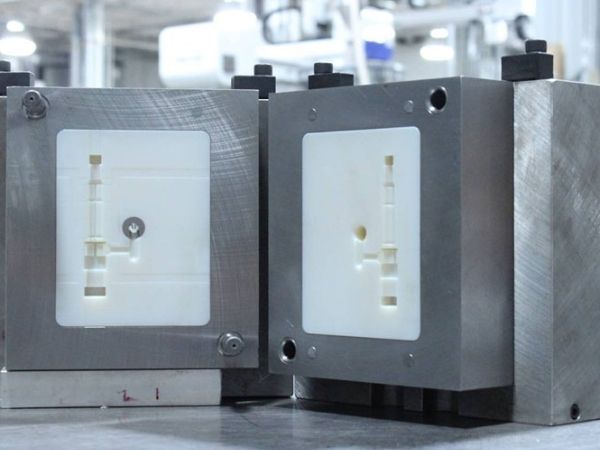
A plastic injection mold is a core shaping device in modern industrial plastic product manufacturing technology. It helps businesses optimize productivity, ensure dimensional consistency, and improve the aesthetic quality of each finished part. APEX Vietnam provides information to understand the nature of molds, select the appropriate mold type, and additive solutions to address injection-molded product quality issues.
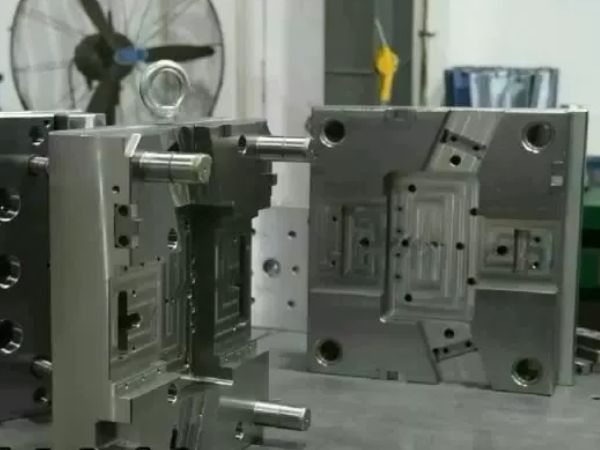
APEX Vietnam introduces plastic injection molds and process improvement solutions
What is a plastic injection mold?
A plastic injection mold is a precision-manufactured industrial tool used to shape molten plastic into a fixed-form product through the injection molding process. In other words, the plastic injection mold is the template that determines the shape, dimensions, and accuracy of the final plastic product.
A plastic injection mold is fundamentally a mechanical system consisting of multiple assembled components, machined from high-hardness alloy steel or stainless steel to withstand the high pressures and temperatures sustained across hundreds of thousands of injection cycles. The plastic injection mold plays a central role in the plastics industry, closely linked to the injection molding machine, plastic raw materials (PP, PE, PVC, PC, ABS, etc.), and plastic additives.
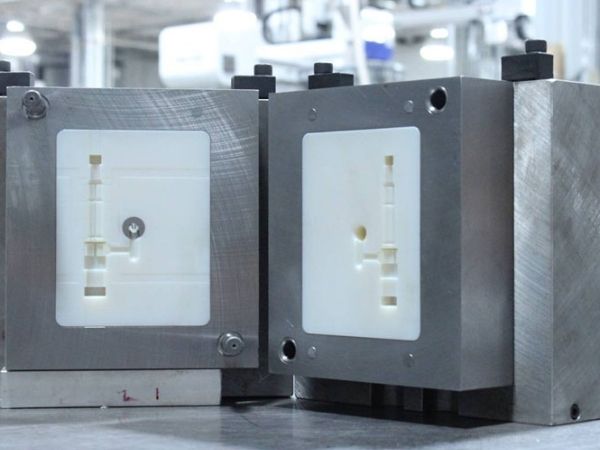
Injection molds shape molten plastic into desired products
Structure of a plastic injection mold
A standard plastic injection mold assembly consists of multiple components that work in coordination. Understanding the structure helps explain why mold quality directly affects product quality.
- Cavity and Core: These two components directly determine the external and internal shape of the product. The cavity forms the outer surface, while the core forms the internal features of the product.
- Runner System: Consists of the sprue, runner channels, and gate, responsible for directing molten plastic from the injection molding machine into the cavity uniformly.
- Cooling System: Water channels inside the mold rapidly reduce plastic temperature, shortening the injection cycle and stabilizing product dimensions.
- Ejector System: Consists of ejector pins that separate the product from the mold after the plastic has solidified.
- Mold Plates and Parting Line: The boundary between the two mold halves, which directly affects whether flash lines appear on the product.
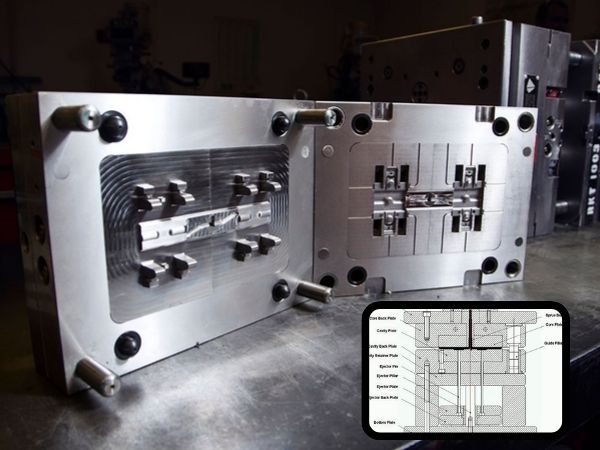
Plastic injection mold structure
Each component in the plastic injection mold structure does not operate independently - they are closely interdependent: a poor cooling system affects the solidification time of plastic in the cavity, while an incorrectly designed runner system causes uneven pressure across the entire mold.
Operating principle of a plastic injection mold
The operating principle of a plastic injection mold is tied to the injection molding process, which follows this logical sequence:
- Material feeding: Virgin or recycled resin pellets are fed into the hopper of the injection molding machine.
- Heating and melting: The screw inside the injection machine barrel rotates and pushes the plastic through heating zones, converting it from solid to molten state.
- Injection: Molten plastic is injected into the mold through the runner system under high pressure, completely filling the cavity.
- Cooling and solidification: Plastic inside the mold is cooled by the cooling system, solidifying into the exact shape of the cavity and core.
- Mold opening and part ejection: The two mold halves separate at the parting line, and the ejector system pushes the finished part out.
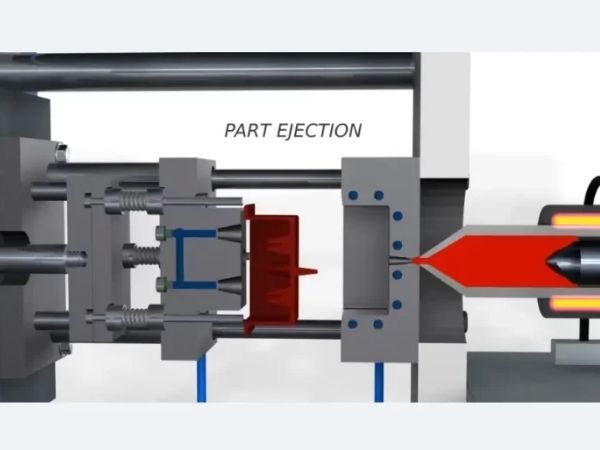
Operating principles of plastic injection molds
This entire cycle repeats continuously, making mold durability and operating parameter stability the two determining factors of production throughput.
Common types of plastic injection molds
Classified by design criteria and application, plastic injection molds are divided into several main groups, each suited to a different production objective:
- 2-Plate Mold: The simplest structure, suitable for products with basic shapes and low manufacturing cost.
- 3-Plate Mold: Allows more flexible gate placement, commonly used for products with multiple injection points or high aesthetic requirements.
- Stack Mold: Increases the number of parts per injection cycle without increasing machine clamping force, suitable for high-volume production.
- Gas-Assisted Mold: Uses compressed gas to create hollow sections inside the product, reducing weight and saving material.
- 2K / Multi-Shot Mold: Allows two types of plastic or two colors to be injected in a single cycle, commonly used for products requiring soft-touch grips or dual-color combinations.
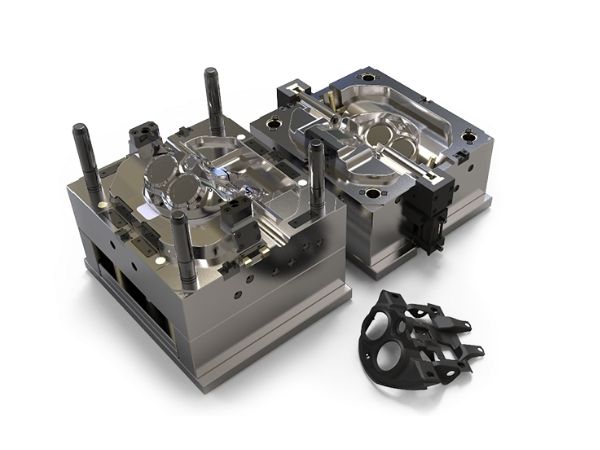
Common types of injection molds
Factors affecting injection-molded product quality
Injection-molded product quality depends not only on the plastic injection mold design but is also influenced by multiple interrelated factors:
- Plastic raw material quality: The purity, moisture content, and melt flow index (MFI) of the resin directly affect product uniformity.
- Mold design: Gate location and non-uniform wall thickness easily cause warpage or sink marks.
- Injection machine parameters: Temperature, injection pressure, injection speed, and cooling time must be calibrated appropriately for each resin type.
- Mold condition: A mold with wear, surface pitting, or a blocked cooling system will reduce product accuracy over time.
- Plastic additives: Adding additives (processing aids, mold release agents, heat stabilizers, etc.) at the correct ratio significantly improves resin flow and reduces part defects.

Factors affecting the quality of injection-molded products
In practice, many businesses encounter difficulties in raw material and additive blending, leading to a noticeable difference in output quality that a suitable additive system can address.
How to improve injection molding efficiency and extend mold life?
Maintaining the operating performance of a plastic injection mold requires businesses to apply strict technical management standards. Integrated solutions protect the mold cavity surface from wear and deformation.
Selecting the right raw material
Each product type requires a base resin with suitable characteristics:
- PP for toughness and low cost.
- ABS for rigidity and impact resistance.
- PC for transparency and good heat resistance.
Selecting the wrong material not only affects product quality but also increases friction and mold wear during injection molding.
Optimizing the blending formula and additives
The blending formula - such as the ratio between base resin, additives, and fillers - directly determines the flow, surface gloss, and dimensional stability of the product. A well-optimized formula reduces the required injection pressure, thereby reducing mold wear and shortening the production cycle.
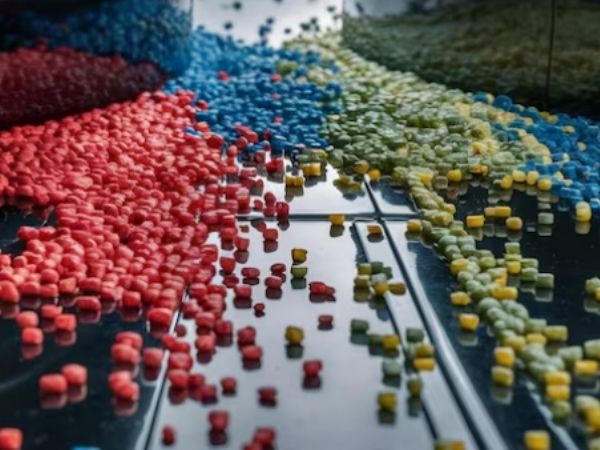
Optimizing incoming materials for injection molding efficiency and mold life
Periodic mold maintenance
Cleaning the plastic injection mold surface, inspecting the cooling system, and lubricating moving parts must be carried out periodically to prevent rust, wear, and blockages. The technical team should also maintain a log tracking the number of injection cycles per mold in the plant to plan maintenance accordingly.
Controlling operating parameters
Mold temperature, holding pressure, and cooling time must be continuously monitored and adjusted per production batch - particularly when changing materials or under varying weather conditions - to ensure the product consistently meets the original design specifications.
Additive solutions to improve the injection molding process and product quality
Among the factors affecting injection-molded product quality, additives are often the easiest to optimize without requiring mold redesign or new machinery investment. A suitable additive system can:
- Improve resin flow, reducing the required injection pressure and temperature.
- Reduce mold sticking, minimize flash, and shorten mold cleaning time.
- Increase surface gloss and color consistency between production batches.
- Extend mold service life by reducing friction and corrosion during operation.
However, not every additive formula is suitable for every base resin and every product line. APEX Vietnam supports businesses in evaluating their current formulas, advising on blending ratios, and selecting the right additive system for each product line. Contact our technical team for consultation and competitive pricing on additive solutions suited to your production line - helping businesses improve product quality, extend plastic injection mold service life, and optimize production costs.
Article Classification
Recent Articles
- What is pressure forming? How it works in the plastics industry
- Plastic Injection Mold: Types, Structure, and Operating Principle
- Common problems with plastic pelletizing machines and troubleshooting methods
- Top 7 Reputable Plastic Additives Companies in Vietnam
- Blending Plastic Additives: Formulas for PVC, PP, and PE