
BLOG

- Home
- Blog
- Plastic Polymer Composite Article
- Ways to increase hardness, toughness of PP and PE plastics in injection molding
Ways to increase hardness, toughness of PP and PE plastics in injection molding
October 02,2026
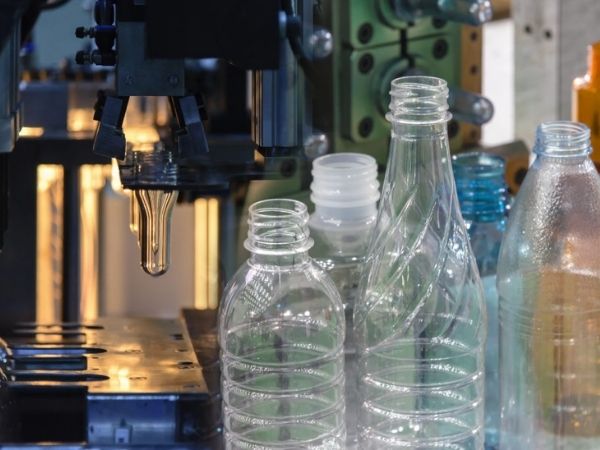
Ways to increase plastic hardness involve technical adjustments to the material structure to improve flexural resistance, prevent deformation, and extend service life. The right methods help PP and PE products meet mechanical standards while reducing input costs. This article from APEX Vietnam covers key hardness factors, practical solutions, their advantages and limitations, and important considerations to avoid production errors.

APEX Vietnam provides detailed ways to increase plastic hardness and toughness
Factors affecting plastic hardness
Before selecting ways to increase plastic hardness, it is essential to understand what influences it. Plastic hardness is fundamentally the material's ability to resist deformation under applied force, and it depends on the following key factor groups:
- Polymer molecular structure: The degree of crystallinity in the molecular structure directly affects hardness. Highly crystalline plastics such as PP and HDPE are generally harder than amorphous plastics such as LDPE.
- Additive composition: Fillers, reinforcements, and plasticizers incorporated during production significantly alter the mechanical properties of the finished plastic.
- Processing conditions: Melt temperature, injection speed, pressure, and particularly the post-injection cooling rate determine the crystalline structure formed in the product, which in turn affects final hardness.
- Wall thickness and product design: Wall thickness, rib design, and the direction of resin flow within the mold are design factors that indirectly influence the overall hardness of the plastic part.
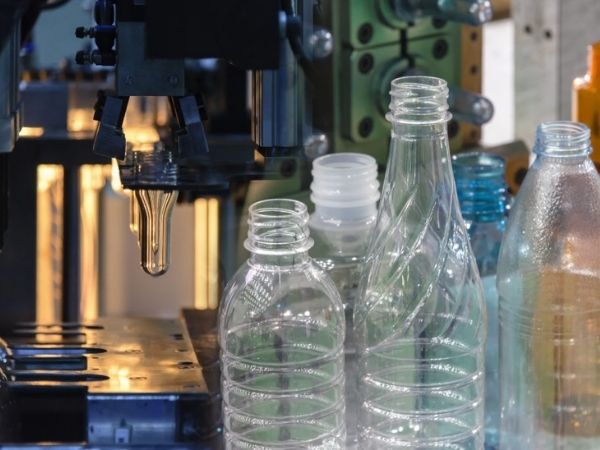
Factors affecting plastic hardness
4+ ways to increase plastic hardness effectively
To modify material mechanical properties, manufacturers can choose to adjust the chemical composition or change processing technology parameters. The following are 4 widely applied ways to increase plastic hardness that are successfully used on modern production lines.
Adding mineral fillers and reinforcing resin particles
Inorganic mineral fillers act as a reinforcing framework embedded within the polymer matrix. This method delivers an immediate increase in hardness while optimizing production costs.
- Talc and Calcium Carbonate (CaCO₃): CaCO₃ powder and flake-form talc mineral are blended into PP resin pellets to increase the flexural modulus index. Talc delivers a pronounced hardness improvement, while CaCO₃ supports dimensional stability and reduces resin costs.
- Glass Fiber: Glass fiber creates mechanical bonds distributed evenly throughout the plastic matrix. The presence of glass fiber transforms standard plastic into a composite material with tensile and compressive strength many times greater than the base resin.
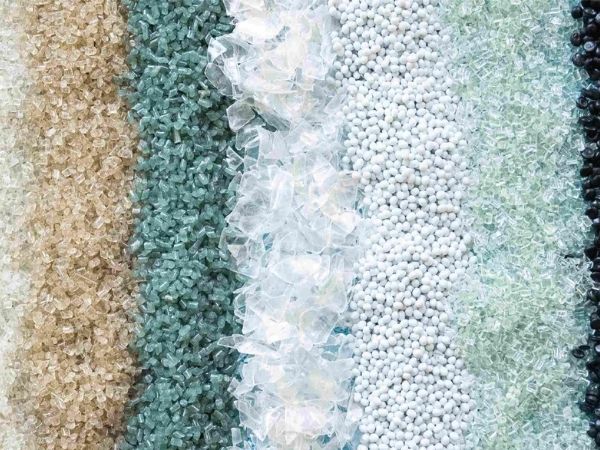
Adding fillers and reinforcing plastic resins
Adjusting the plastic formula with copolymers and polymer blending
Combining different polymer types produces material variants with superior mechanical properties. This blending technique addresses the brittleness problem associated with purely rigid plastics.
- Copolymer resin application: PP Copolymer incorporates ethylene segments into the propylene chain to create a tough block structure. This structure maintains the necessary rigidity of the PP framework while effectively distributing impact forces.
- Polymer blending: Engineers blend PP/PE with high-hardness engineering plastics such as Polystyrene (PS) or Polyamide (Nylon). The resulting blend achieves a balance of properties, improving both flexural hardness and heat resistance.
Controlling the thermal processing cycle and cooling rate
Processing temperature parameters determine the molecular uniformity and crystalline completeness of the plastic. Precisely setting the thermal cycle optimizes plastic mechanical properties without adding material costs.
- Appropriate melt temperature: Higher melt temperatures allow polymer chains to fully disperse and straighten their bonds. This homogeneous melt state eliminates stress concentration points within the mold cavity.
- Applying a slow cooling process: Properly adjusting mold temperature extends the crystallization time of the plastic. A gradual cooling cycle allows crystal nuclei to grow to their full size, producing a harder and more dimensionally stable plastic structure.
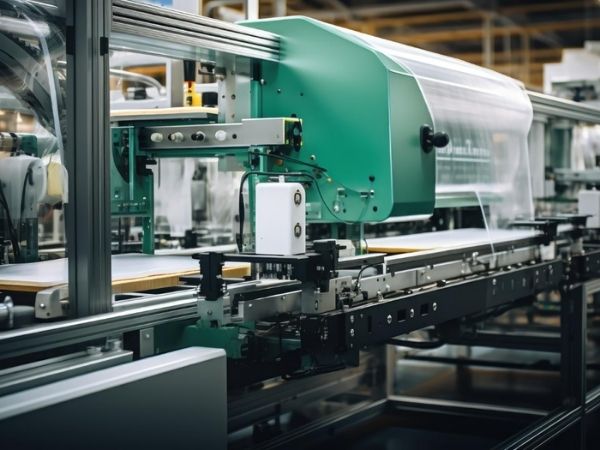
Controlling the thermal processing cycle and cooling rate
Using hardness-enhancing additive pellets and nucleating agents
Specialty additives act directly on the microscopic process of plastic structure formation. This high-technology solution is the preferred choice of many manufacturers.
- Nucleating agents: Nucleating additives provide a vast number of ultra-fine nuclei for polymer chains to attach to and crystallize rapidly. The sharp increase in crystal density produces higher product hardness and improved transparency in PP plastics.
- Antioxidants for chain protection: Antioxidants prevent thermal degradation and chain scission of polymer chains within the injection molding machine. Maintaining molecular chain length helps the product retain its original hardness across multiple production cycles.
Comparison of plastic hardness enhancement solutions
Each of the ways to increase plastic hardness has its own technical advantages and investment cost profile. The detailed comparison table below provides an overview of the 4 technical solution groups based on practical operating criteria:
|
|
|
|
|
|
|
|
|
|
|
|
|
|
|
|
|
|
|
|
|
|
|
|
|
|
|
|
|
|
Important considerations when increasing plastic hardness
Adjusting plastic material hardness always affects other mechanical properties simultaneously. Engineers implementing ways to increase plastic hardness must closely monitor the following technical risks to prevent defect generation.
- Avoid excessive filler loading: Using mineral fillers beyond 35% by ratio breaks the bonding continuity of the polymer matrix. The resin loses structural integrity, resulting in rough surface finish, reduced tensile strength, and severe brittleness.
- Higher hardness may reduce toughness: Increasing hardness means reducing the material's elastic deformation capacity. Plastics that are too rigid are prone to sudden cracking under heavy impact or when operated in low-temperature environments.
- Impact on welding, printing, or surface quality: Large-particle fillers can migrate to the part surface during mold filling. Their presence reduces aesthetic gloss and creates difficulties for ink printing, coating, or ultrasonic welding operations.
- Testing before mass production is mandatory: Every new additive blending formula must go through a sample molding (sampling) stage. Technicians are required to measure hardness, flexural strength, and impact resistance before committing to full-scale production runs.
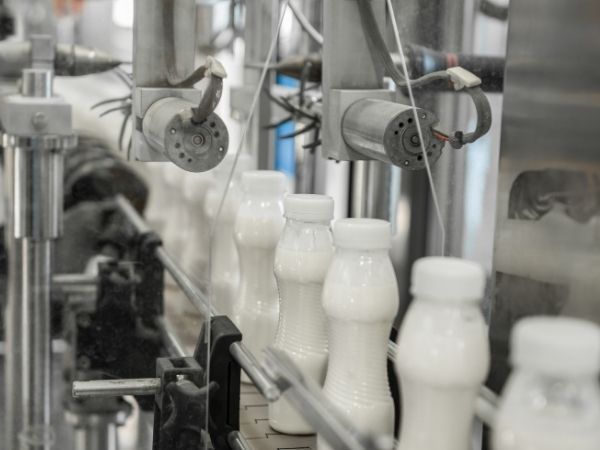
Considerations when increasing plastic hardness
Applying the right ways to increase plastic hardness helps businesses improve the load-bearing capacity and mechanical durability of PP and PE products while optimizing material costs. Mastering technical solutions, from filler and additive blending to thermal cycle control, creates a sustainable competitive advantage. Contact APEX Vietnam for expert consultation and high-quality hardness-enhancing additives for your production facility.
Article Classification
Recent Articles
- Plastic Injection Mold: Types, Structure, and Operating Principle
- Common problems with plastic pelletizing machines and troubleshooting methods
- Top 7 Reputable Plastic Additives Companies in Vietnam
- Blending Plastic Additives: Formulas for PVC, PP, and PE
- What is the difference between PE and PP packaging?