
NEWS & EVENTS

- Home
- News
- Products Information
- Types of Plastic Materials in Construction and Their Common Applications
Types of Plastic Materials in Construction and Their Common Applications
March 10,2026
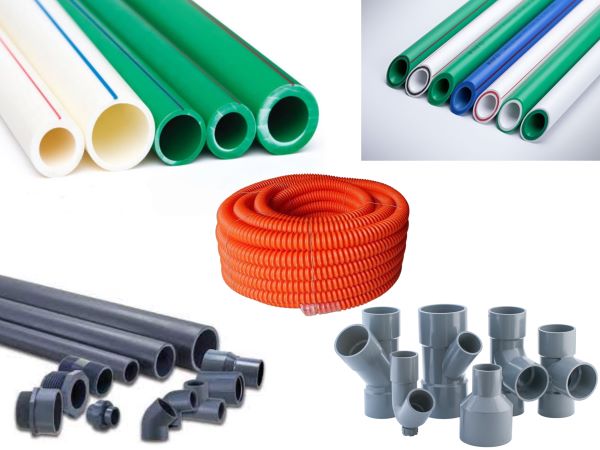
In recent years, plastic materials in construction have increasingly affirmed their important role thanks to their flexibility, high durability, and reasonable cost. From water piping systems, roofing sheets, and plastic flooring to insulation materials, plastics have become an effective alternative to many traditional building materials. Not only do they help optimize construction time, but plastic materials also contribute to extending the lifespan of structures while meeting both aesthetic and technical standards in modern construction.
Acrylic Plastic
Applications of Polyvinyl Chloride
Applications of Polypropylene
Polycarbonate
Plastic used for Roofing Sheets
Plastic used for Flooring

Soundproof Plastic Doors
Fire resistance and fire safety
Most plastics are flammable at high temperatures. Therefore, contractors should prioritize products with flame-retardant additives (such as fire-resistant PVC compounds) that meet V0 or V1 standards according to UL94 or current fire safety regulations in Vietnam.
Thermal expansion coefficient
Plastics generally have a higher thermal expansion coefficient than metals. When installing long pipelines or large-area plastic roofing sheets, expansion joints should be included in the design, or thermal stabilizing additives should be used to prevent warping and cracking.
UV resistance
Sunlight can break polymer bonds, causing brittleness and discoloration. For outdoor applications, it is essential to choose plastics with UV-resistant coatings or those integrated with high-quality color masterbatch capable of resisting ultraviolet radiation.
Sustainability and recyclability
In the era of green construction, selecting eco-friendly plastics and recycled plastic materials for construction is a significant advantage for projects. It is advisable to work with suppliers that are transparent about material sources and have clear recycling processes.
With outstanding advantages such as durability, weather resistance, aesthetic appeal, and reasonable cost, plastic materials in construction are becoming an inevitable trend in the modern construction industry. Choosing and applying the right materials not only improves the quality of structures but also optimizes long-term economic efficiency. As technology continues to advance, plastic materials are expected to be further improved to better meet the requirements of safety, sustainability, and environmental friendliness.
Why choose plastic in construction?
The use of plastic materials in construction has not become a global trend by chance. Plastics possess physical and chemical properties that few other materials can perfectly replace within the same price segment.- Corrosion resistance and chemical durability: Unlike metals that easily oxidize or wood that is susceptible to termites, plastics such as PVC and HDPE have excellent resistance to acids, alkalis, and environmental impacts. This is especially important for underground infrastructure projects or coastal areas.
- Lightweight and easy installation: Plastics have low density, which helps reduce the load on building structures. Transporting and installing plastic roofing sheets or HDPE pipes becomes easier, significantly reducing labor costs and construction time.
- Outstanding sound and thermal insulation: In the context of energy saving, PS insulation plastics and steel-reinforced plastic window systems help maintain stable indoor temperatures, reducing the operating costs of air-conditioning systems.
- Flexibility in design: Plastics can be molded, pressed, or formed into almost any shape. From complex interior decorative details to load-bearing components in plastic composite materials, plastics support the creative ideas of architects.
- Economic efficiency: Considering the product life cycle cost, plastic materials often have lower maintenance costs and longer service life, providing long-term financial benefits for investors.
Common Types of Plastic Materials in Construction
To choose the right material for each application, it is necessary to clearly understand the properties of each specific type of plastic.Acrylic
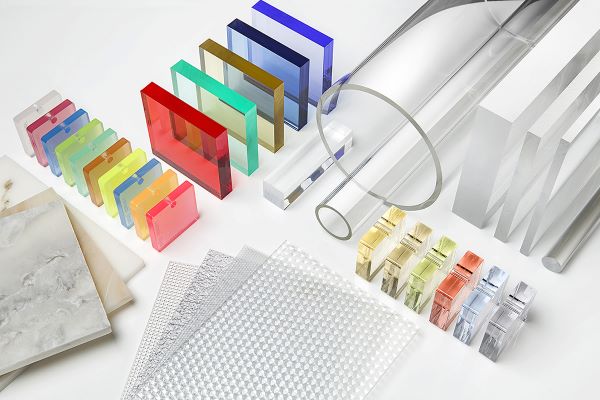
Acrylic, commonly known as Mica, is a transparent thermoplastic that is often used as a substitute for glass due to its superior mechanical and physical properties.Acrylic Plastic
- Technical characteristics: Acrylic has a light transmittance of up to 92%, weighs only half as much as glass, and has an impact resistance 10–17 times greater than ordinary glass. It also has natural resistance to ultraviolet (UV) rays and does not turn yellow after long periods of outdoor use.
- Practical applications:
- Used in decorative partitions that allow natural light to pass through.
- Applied as skylight windows for office buildings or shopping centers.
- Used in infinity swimming pools or protective panels in stadiums.
Composite Materials
Plastic composite materials are a combination of a polymer matrix (such as Epoxy or Polyester) and reinforcing materials (fiberglass, carbon fiber, or wood flour). This represents an advanced stage of material technology, creating components that offer extremely high strength while remaining very lightweight.- Common types:
- FRP (Fiber Reinforced Plastic):
Fiberglass-reinforced plastic with excellent compressive and tensile strength. It is commonly used for manhole covers, chemical storage tanks, and wall panels. - WPC (Wood Plastic Composite):
Also known as wood–plastic composite, it combines PE/PVC plastic with wood powder. It is a leading choice for outdoor applications such as pool decking and pergolas because it does not suffer from termite damage or warping.
- FRP (Fiber Reinforced Plastic):
- Economic benefits: Although the initial investment cost may be higher than natural wood, the maintenance cost is nearly zero over a service life of 20–25 years.
PVC or Polyvinyl Chloride
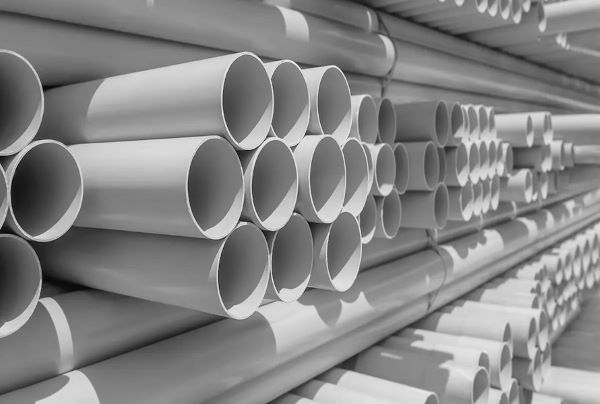
It can be said that PVC plastic in construction is one of the most important and widely used plastic materials today. It exists in two forms: rigid PVC (uPVC) and flexible PVC.Applications of Polyvinyl Chloride
- PVC pipes in construction: More than 70% of global drainage systems use uPVC pipes. Their smooth inner surface reduces flow friction, preventing the buildup of sediment and bacteria. You can also refer to additional standards related to plastic piping systems.
- PVC/ASA roofing sheets: This represents a new advancement in roofing technology. The outer ASA (Acrylonitrile Styrene Acrylate) layer helps the roofing sheets resist chemicals, prevent corrosion from sea salt, and maintain long-lasting color under the intense sunlight conditions typical in Vietnam.
- PVC boards: Commonly used for kitchen cabinets and bathroom vanity cabinets due to their 100% water resistance, effectively replacing MDF or MFC engineered wood in humid environments.
Polypropylene
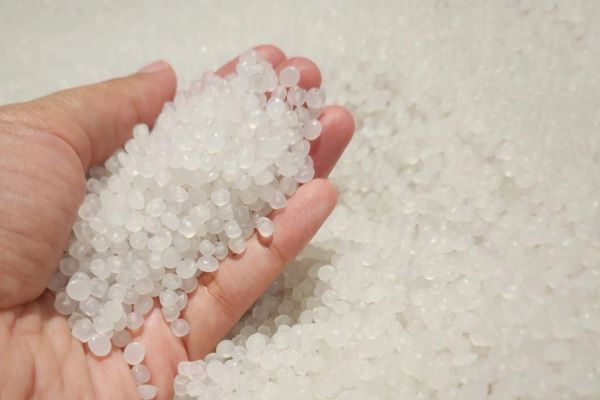
PP plastic in construction is known for its high heat resistance and the highest chemical inertness among common types of plastics.Applications of Polypropylene
- PPR pipes (Polypropylene Random Copolymer): This is considered the gold standard for hot and cold water supply systems in townhouses and high-end apartment buildings. With heat resistance of up to 95°C and the ability to withstand high pressure, PPR pipes prevent leakage at thermal fusion joints.
- Danpla plastic sheets in construction: Danpla plastic (a hollow structure similar to cardboard but made from PP plastic) is extremely useful during the construction phase. Engineers often use them for:
- Protecting stone or wooden floors during the interior finishing stage.
- Serving as formwork for small concrete components that require smooth surfaces.
- Acting as temporary partitions at clean construction sites such as hospitals or food processing factories.
- Geotechnical applications: PP fibers are used to produce geotextile fabrics, which help reinforce soil foundations and prevent erosion in transportation infrastructure projects.
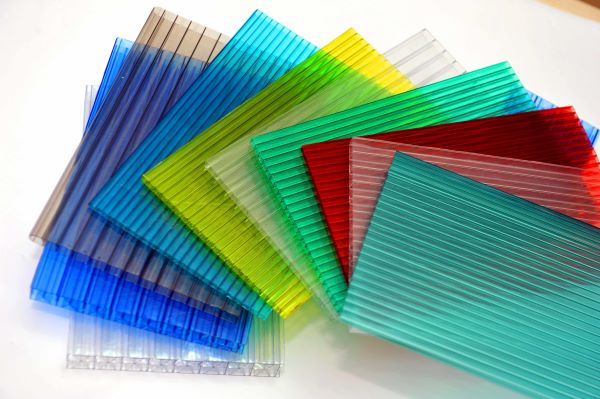
Polycarbonate
When referring to PC plastic in construction, we are talking about one of the leading smart and safe daylighting solutions.Polycarbonate
- “Unbreakable glass” characteristic: Polycarbonate has an impact resistance 250 times greater than glass and 20 times stronger than Acrylic plastic. It is almost impossible to break with a hammer or bricks, ensuring maximum safety for construction projects.
- Optical performance and thermal insulation: PC sheets provide excellent light transmission while blocking up to 99% of harmful UV rays. The hollow structure of PC sheets offers superior thermal insulation, helping reduce indoor temperatures in factories by about 3–5°C.
- Applications: Stadium roofing, high-tech agricultural greenhouses, and noise barrier walls along highways.
How are plastics used in construction?
The versatility of plastics allows them to be present in every stage of construction, from foundation treatment to interior finishing and decoration.Roofing Sheets
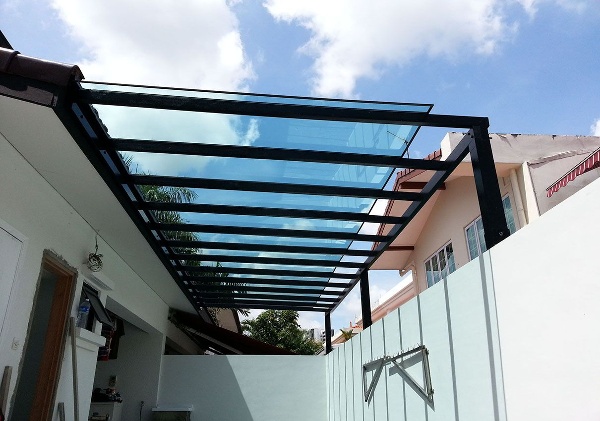
The use of plastic roofing sheets is becoming a major trend in the construction industry.- Polycarbonate plastic: Used for skylight roofing. With either solid or hollow structures, PC sheets help utilize natural light, reducing lighting costs.
- PVC/ASA plastic roofing in construction: This is a smart four-layer roofing sheet. The top ASA layer provides excellent weather resistance, prevents color fading, and offers strong protection against sea salt corrosion. This type of roofing is very popular in industrial factories located in Vietnam’s coastal areas.
Plastic used for Roofing Sheets
Flooring
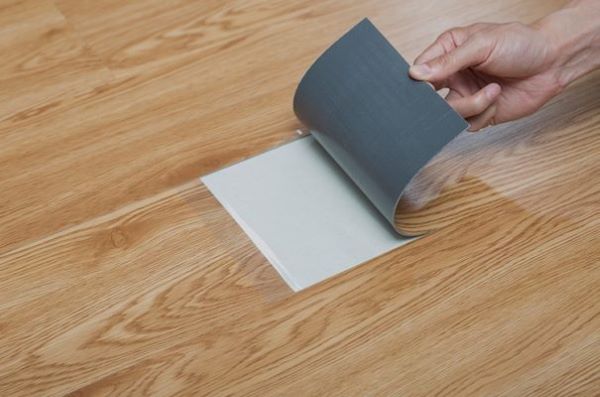
Plastic flooring has become more popular than natural wood flooring and ceramic tiles.- SPC flooring: A combination of stone powder and plastic, creating flooring that is 100% waterproof, does not shrink, and is resistant to termites.
- Wood–plastic composite (WPC): Commonly used for outdoor flooring and pool decks thanks to its natural wood-like appearance while remaining durable under sun and rain exposure.
Plastic used for Flooring
Insulation Materials
PS insulation plastics (EPS, XPS) and Polyurethane (PU) are among the leading solutions for thermal insulation.- XPS (Extruded Polystyrene): It features a perfectly closed-cell structure with high compressive strength, making it suitable for cold storage flooring or heat insulation for concrete roofs.
- Plastic insulation for walls and roofs: These materials significantly reduce the thermal transmittance coefficient (U-value), helping buildings save up to 40% in operational energy consumption.
Doors
Wood–plastic composite doors and uPVC steel-reinforced plastic doors are gradually replacing traditional wooden doors.- Advantages: They provide excellent sound insulation, do not warp over time, and offer tight sealing that effectively prevents water infiltration and strong winds.
Soundproof Plastic Doors
Windows
uPVC plastic window frames combined with insulated glass are a standard soundproofing and thermal insulation solution for modern buildings. uPVC plastic has thermal conductivity dozens of times lower than aluminum.Pipes
This is the oldest and most widely used application. However, comparing PVC plastic and HDPE plastic in construction is always a consideration for engineers:- uPVC pipes: Rigid with good pressure resistance, commonly used for residential drainage systems.
- HDPE pipes: Flexible and capable of withstanding ground vibrations, making them suitable for large-scale clean water supply systems and industrial wastewater drainage.
Considerations before choosing plastic materials in construction
Despite their many advantages, selecting plastic materials in construction requires careful technical consideration.Fire resistance and fire safety
Most plastics are flammable at high temperatures. Therefore, contractors should prioritize products with flame-retardant additives (such as fire-resistant PVC compounds) that meet V0 or V1 standards according to UL94 or current fire safety regulations in Vietnam.
Thermal expansion coefficient
Plastics generally have a higher thermal expansion coefficient than metals. When installing long pipelines or large-area plastic roofing sheets, expansion joints should be included in the design, or thermal stabilizing additives should be used to prevent warping and cracking.
UV resistance
Sunlight can break polymer bonds, causing brittleness and discoloration. For outdoor applications, it is essential to choose plastics with UV-resistant coatings or those integrated with high-quality color masterbatch capable of resisting ultraviolet radiation.
Sustainability and recyclability
In the era of green construction, selecting eco-friendly plastics and recycled plastic materials for construction is a significant advantage for projects. It is advisable to work with suppliers that are transparent about material sources and have clear recycling processes.
With outstanding advantages such as durability, weather resistance, aesthetic appeal, and reasonable cost, plastic materials in construction are becoming an inevitable trend in the modern construction industry. Choosing and applying the right materials not only improves the quality of structures but also optimizes long-term economic efficiency. As technology continues to advance, plastic materials are expected to be further improved to better meet the requirements of safety, sustainability, and environmental friendliness.