
NEWS & EVENTS

- Home
- News
- Products Information
- What Is Cement Setting Time? Factors That Affect It
What Is Cement Setting Time? Factors That Affect It
March 11,2026
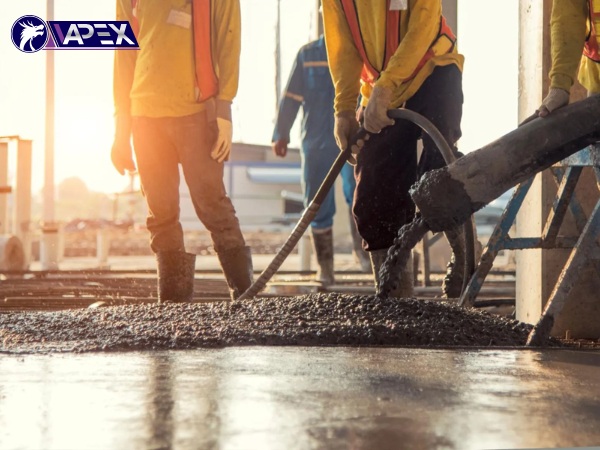
What is cement setting time? In practice, setting time not only determines the workability during concrete placement but also directly affects the strength, durability, and completion schedule of a construction project. Understanding the nature of the setting process as well as the influencing factors helps businesses and engineers control material quality more effectively.
Details of Cement Setting Time: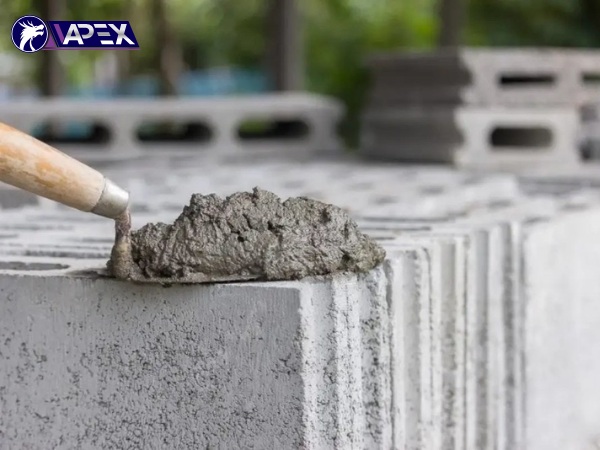
Cement setting time typically begins after about 45 minutes
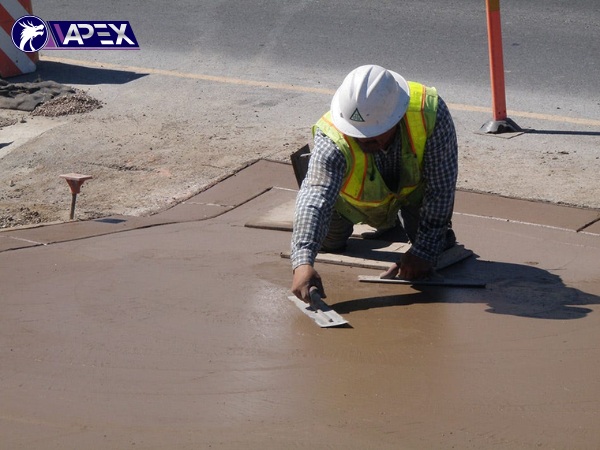
An ideal setting time helps concrete achieve a smooth finish and minimizes surface cracking
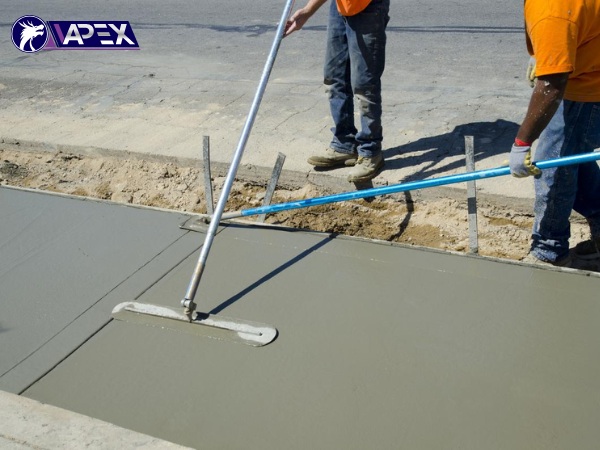
Cement setting time depends on many factors
What Is Cement Setting Time?
Cement setting time (counted from the moment water is added) typically begins after about 45 minutes and finishes within 6.5 to 10 hours, depending on the type of cement. Cement mortar usually starts to harden after 20–30 minutes, forms a surface set after 24 hours, and reaches its design strength after 28 days.Details of Cement Setting Time:
- Initial setting time: According to TCVN standards, the initial setting time must not occur earlier than 45 minutes.
- Final setting time: The setting process is usually completed within 6.5 hours (up to 10 hours for blended cement).
- Strength development: After 24 hours, light walking on the surface is possible; the material reaches about 80% of its strength after 7 days and full strength after 28 days.
Cement setting time typically begins after about 45 minutes
Why Is Cement Setting Time Important?
Cement setting time is one of the key technical parameters that determines concrete quality, construction progress, and the long-term durability of structures. Specifically:Optimize Construction Quality and Durability
Setting time directly affects the hydration process, load-bearing capacity, and service life of concrete. Choosing cement with an appropriate setting time helps achieve high strength, limit cracking, reduce shrinkage, and improve water resistance.Improve Construction Efficiency and Save Costs
A suitable setting time allows processes such as pouring, compacting, leveling, and surface finishing to proceed smoothly. If cement sets too quickly, construction becomes difficult; conversely, if it sets too slowly, the schedule may be delayed, leading to additional labor, equipment, and project management costs.Adapt to Vietnam’s Climate Conditions
Hot and humid climates, frequent rainfall, or temperature differences across regions can affect the setting rate. Using cement with an appropriate setting time helps minimize environmental impacts and ensures concrete quality under various construction conditions.Ensure Surface Aesthetics
An ideal setting time helps concrete achieve a smooth and uniform finish while minimizing surface cracking. This is especially important for structures requiring high aesthetic standards, such as floors, road surfaces, water tanks, or exposed concrete components.Suitable for Large-Scale Projects
For projects requiring continuous construction, large-volume concrete pouring, or multi-layer casting, an appropriate setting time helps maintain the workability of the mix, ensures strong bonding between concrete layers, and meets strict technical requirements.An ideal setting time helps concrete achieve a smooth finish and minimizes surface cracking
Factors Affecting Cement Setting Time
Cement setting time is not fixed; it depends on many factors ranging from environmental conditions to material characteristics and mix composition.- Ambient temperature: High temperatures accelerate the hydration reaction between cement minerals and water, thereby shortening the setting time. Conversely, low temperatures slow down the reaction, prolong the setting process, and may affect construction progress.
- Cement fineness: Finer cement has a larger surface area in contact with water, which promotes faster hydration. Therefore, the finer the cement, the shorter the setting time tends to be.
- Water-cement ratio: An excessively high water ratio reduces the concentration of reactive minerals in a unit volume, prolonging the setting time and reducing the later strength of concrete. On the other hand, if the water content is too low, the mixture may become difficult to work with during construction.
- Additives and fillers: Components such as gypsum, mineral admixtures, or CaCO₃ stone powder can alter the kinetics of the hydration reaction. Depending on the content and properties of each additive, the setting time can be adjusted to become faster or slower to suit specific construction requirements.
Cement setting time depends on many factors
Does Adding Calcium Carbonate Powder Help Optimize Cement Setting Time?
Yes. In modern cement and concrete production, calcium carbonate powder is not only a conventional filler but also a technical component that helps regulate and optimize setting time.- Ultra-fine CaCO₃ particles create an activated surface that promotes the early formation of hydration products, helping concrete reach a stable setting state within a controllable time range.
- Calcium carbonate powder can interact with the C₃A phase to form carboaluminate, contributing to the adjustment of reaction kinetics and helping control the initial setting process.
- Calcium carbonate powder also helps optimize particle packing, improving the flowability and uniformity of cement paste, thereby supporting construction activities within an appropriate setting period.
- When used in the correct proportion, calcium carbonate powder helps maintain the necessary working time while still ensuring early strength development, making it suitable for projects that require strict schedule control.
APEX Provides Calcium Carbonate Powder Solutions for the Construction Materials Industry
Established in 2021, APEX Vietnam specializes in manufacturing and supplying ultra-fine calcium carbonate powder for the construction materials industry, meeting technical standards for cement and ready-mix concrete production. APEX’s calcium carbonate powder is produced from high-purity natural limestone and strictly controlled throughout each production stage to ensure:- High fineness and uniform particle size: Supports optimized hydration kinetics and better control of the setting process.
- High CaCO₃ content with low impurities: Minimizes negative impacts on the mineral system and chemical admixtures.
- Low moisture and consistent batch quality: Helps maintain stability in large-scale production.
- Stable supply capacity for large orders: Suitable for cement plants and ready-mix concrete batching stations.