
NEWS & EVENTS

- Home
- News
- Products Information
- What Role Does Calcium Carbonate Powder Play in Rubber Vulcanization?
What Role Does Calcium Carbonate Powder Play in Rubber Vulcanization?
March 11,2026
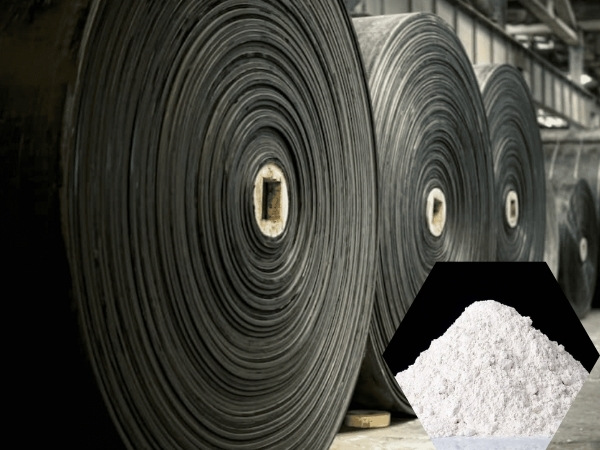
What role does calcium carbonate powder play in rubber vulcanization? Does CaCO₃ actually influence cross-link density as well as the final product quality? The article below from APEX Vietnam analyzes the technical role and economic value of calcium carbonate powder in industrial rubber production.
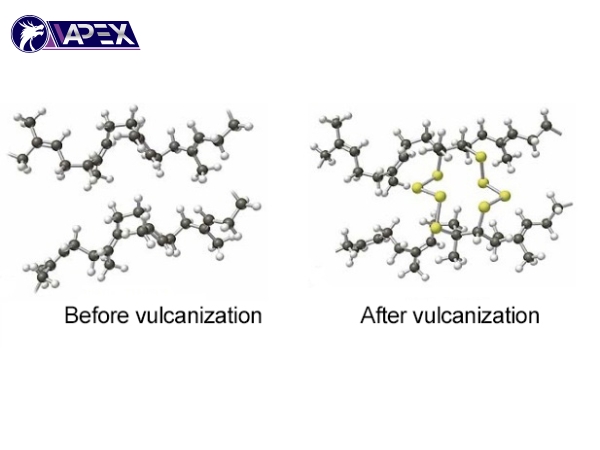
Rubber vulcanization is the process of forming cross-links between polymer chains
What Is the Rubber Vulcanization Process?
Rubber vulcanization is the process of forming cross-links between polymer chains in rubber materials, creating a stable three-dimensional network structure. These cross-links restrict the free sliding of polymer chains when exposed to mechanical forces or temperature, thereby significantly improving the elasticity, tensile strength, and shape retention of the final product.Rubber vulcanization is the process of forming cross-links between polymer chains
For natural rubber, whose primary structure is polyisoprene, vulcanization is typically carried out using sulfur or other vulcanizing agent systems (such as peroxide or metal-based systems). In a sulfur curing system, sulfur atoms react at the double bond (C=C) positions along the polymer chain, forming monosulfide (–S–), disulfide (–S–S–), or polysulfide (–Sₓ–) bridges between the chains.
As a result of this process, the material transforms from a soft, flowable state into a stable elastic state that can withstand mechanical stress, resist abrasion, and maintain its mechanical performance at high operating temperatures without melting like thermoplastics.
In industrial rubber production, calcium carbonate (CaCO₃) powder is a common filler that directly affects vulcanization characteristics, polymer network structure, and the economic performance of the compound. Depending on particle size, purity, and dispersion level, calcium carbonate powder can influence both the reaction kinetics and the mechanical properties after vulcanization.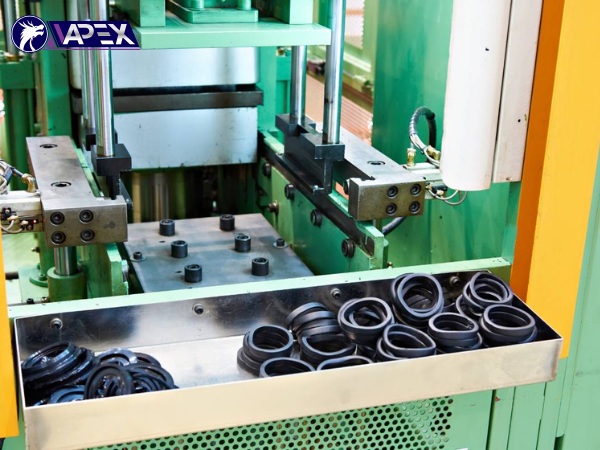
The characteristics of fillers significantly affect the structure and properties after vulcanization
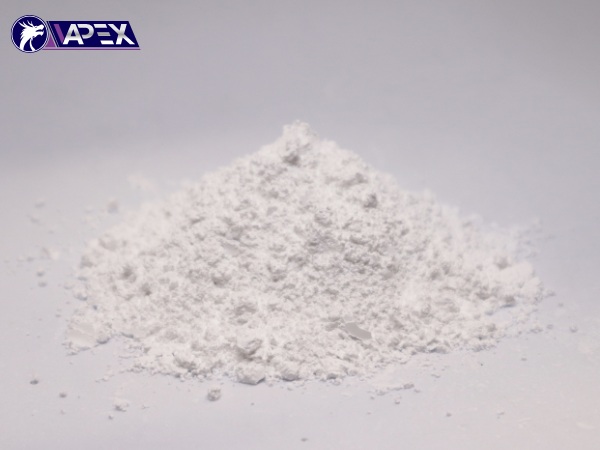
The content and fineness of calcium carbonate powder affect the viscosity of the compound
As a result of this process, the material transforms from a soft, flowable state into a stable elastic state that can withstand mechanical stress, resist abrasion, and maintain its mechanical performance at high operating temperatures without melting like thermoplastics.
Factors Affecting the Vulcanization Process
The vulcanization process does not depend solely on the chemical system; it is also influenced by multiple technical parameters and processing conditions, including the following:Temperature
Temperature is the key factor determining the rate and completion level of the vulcanization reaction. In sulfur curing systems, the common temperature range is typically 140–180°C, depending on the formulation and the type of rubber used. As temperature increases, the rate of cross-link formation also increases. However, if the temperature exceeds the optimal range, over-curing or network degradation may occur, reducing elasticity and increasing the brittleness of the material.Time
Vulcanization time directly affects the density and completeness of the polymer network. If the curing time is too short, cross-links may not fully form, resulting in products that are softer, have lower tensile strength, and show poor stability. Conversely, excessive curing time may lead to over-curing, making the material harder, more brittle, and more prone to cracking.Vulcanizing Agent System
The composition and ratio between sulfur, accelerators, and activators determine both the density and the type of cross-links formed in the rubber. If the vulcanization system is not properly designed, the product may lack sufficient strength or become excessively rigid, affecting mechanical performance and service life.Pressure
Pressure during the molding process helps the rubber fill the mold cavity completely, minimizes air bubbles, and ensures a uniform structure. Appropriate pressure contributes to improved surface quality and dimensional stability after curing. If the pressure is insufficient, the product may develop voids or fail to achieve the intended shape. On the other hand, excessively high pressure may introduce internal stress, reducing the long-term durability of the material.Filler Content and Characteristics
The content and characteristics of fillers significantly influence the structure and properties after vulcanization. A higher filler ratio often increases hardness and helps optimize production costs, but it may reduce elasticity. In contrast, poorly dispersed fillers can create stress concentration points, negatively affecting mechanical strength.In industrial rubber production, calcium carbonate (CaCO₃) powder is a common filler that directly affects vulcanization characteristics, polymer network structure, and the economic performance of the compound. Depending on particle size, purity, and dispersion level, calcium carbonate powder can influence both the reaction kinetics and the mechanical properties after vulcanization.
The characteristics of fillers significantly affect the structure and properties after vulcanization
What Role Does Calcium Carbonate Powder Play in Rubber Vulcanization?
What role does calcium carbonate powder play in rubber vulcanization? The main roles of CaCO₃ powder in the rubber vulcanization process include:- Reinforcing and functional filler: CaCO₃ contributes to improved abrasion resistance and dimensional stability. Although it is not a strong reinforcing filler like carbon black, calcium carbonate powder still serves as an effective functional filler in many technical applications.
- Production cost optimization: Adding calcium carbonate powder allows manufacturers to partially replace virgin rubber in the formulation while still maintaining essential technical requirements. This is particularly important in large-scale production, where companies need to balance mechanical performance with compound cost.
- Influence on processing and vulcanization: The content and fineness of calcium carbonate powder affect compound viscosity, mixing performance, and molding behavior. Selecting the appropriate particle characteristics helps control flow properties, support the dispersion of the vulcanization system, and improve stability during the heating process.
- Improved durability and structural stability: Calcium carbonate powder contributes to higher compressive strength, reduced permanent deformation, and improved dimensional stability after vulcanization. In some formulations, CaCO₃ can also help reduce shrinkage, thereby increasing product service life under real operating conditions.
- Enhanced surface quality and aesthetics: Thanks to its high whiteness and fine particle size, calcium carbonate powder improves surface uniformity, enhances color stability, and supports rubber products that require light-colored or aesthetically consistent finishes.
The content and fineness of calcium carbonate powder affect the viscosity of the compound
A Calcium Carbonate Powder Supplier Meeting Technical Requirements for Rubber Vulcanization
To ensure effective vulcanization performance, selecting a calcium carbonate powder supplier that meets technical standards is a critical factor. APEX Vietnam provides reliable raw material solutions for rubber manufacturers nationwide with several key advantages:- Strictly controlled quality: Each batch of CaCO₃ powder is tested for whiteness, fineness, purity, and dispersion capability before delivery, meeting technical requirements for rubber and industrial material production.
- Competitive pricing and flexible discount policies: Transparent quotations with no hidden costs, optimized according to order scale, along with special incentive programs for long-term partners.
- Stable supply and on-time delivery: A well-developed warehouse system and strong supply capacity ensure continuous production and fast nationwide delivery.
- In-depth technical consultation: A team with expertise in compound formulation assists customers in selecting the appropriate fineness grade and dosage, supporting them from initial testing to large-scale production.