
NEWS & EVENTS

- Home
- News
- Products Information
- What is dead cement? Solutions to prevent cement from going dead
What is dead cement? Solutions to prevent cement from going dead
March 11,2026
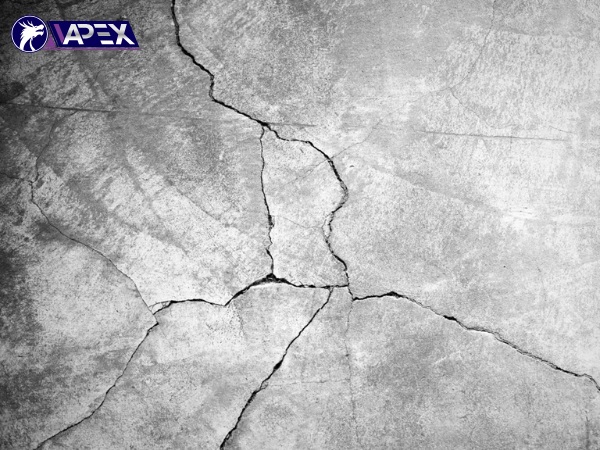
What is dead cement? How can this condition be identified? Understanding the causes, warning signs, and preventive measures will help ensure the quality of cement before it is used in construction. Join APEX Vietnam as we explore this issue in more detail and discover optimal solutions to maintain cement quality in the article below!
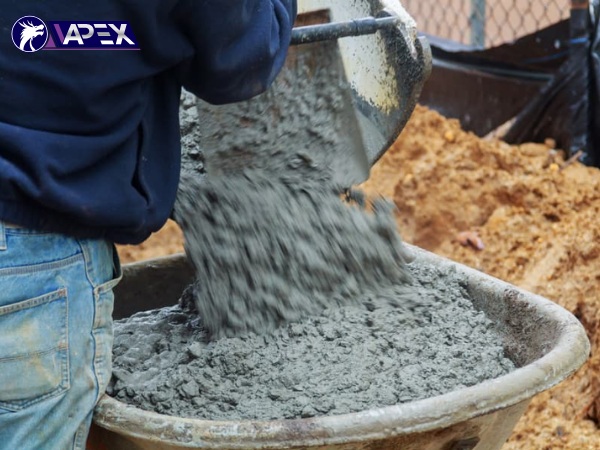
When mixed with water, cement mortar that sets very slowly may indicate dead cement
What is dead cement?
Dead cement refers to a condition in which the material has gradually or completely lost its ability to undergo chemical reactions that create bonding when mixed with water. This phenomenon usually occurs when cement absorbs moisture from the environment or is stored for too long. When dead cement is used in construction, its bonding ability and compressive strength decrease significantly, which can easily lead to cracking, peeling, or negatively affect the durability of the structure.When mixed with water, cement mortar that sets very slowly may indicate dead cement
Signs that cement has gone dead:
In addition, resolving these technical issues can slow down construction progress, affecting the project schedule and increasing the overall cost of the project.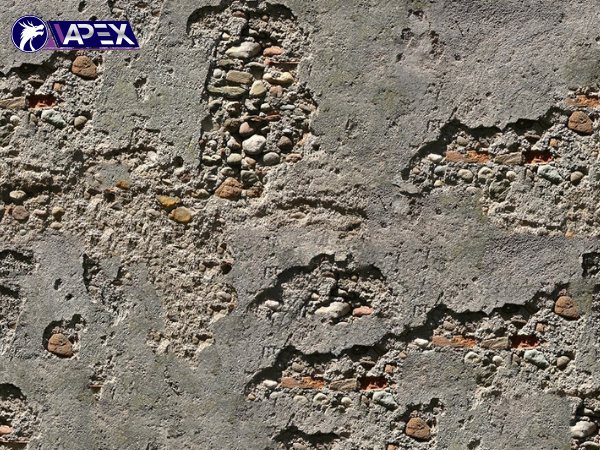
Dead cement causes economic losses and delays the construction progress of the entire project
In modern cement production, calcium carbonate powder is commonly used as a filler material to improve fineness, enhance the filling of micro-voids, and optimize the workability of the mixture. When finely ground and used in appropriate proportions, CaCO₃ can help stabilize the material structure and improve the efficiency of cement usage.
On the other hand, if the limestone powder quality is not ensured or the mixing ratio is inappropriate, the particle structure of the cement may become less stable. This can reduce the overall material quality and negatively affect the strength of concrete or mortar after construction.
To meet the demands of the construction materials industry, APEX supplies high-quality calcium carbonate powder produced through a strict grinding process and rigorous particle size control. APEX products offer several benefits for material production and applications: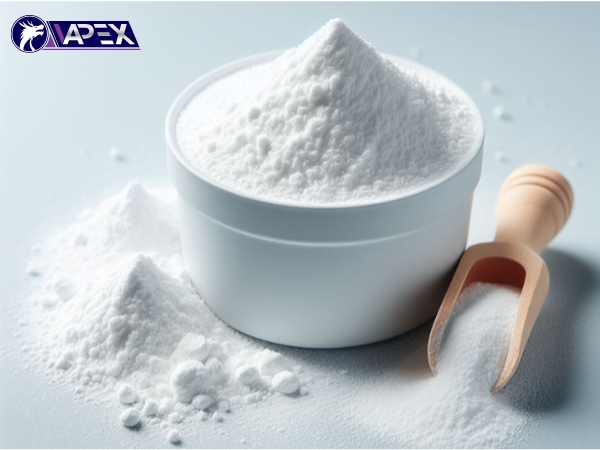
APEX provides high-quality calcium carbonate powder for the cement industry
- Cement forms lumps: When opening the bag, the cement powder is no longer loose and fluffy but clumps together into small or hard lumps due to moisture absorption.
- Cement is not powdery: Try squeezing the cement lumps by hand. If the lumps remain hard, are difficult to break, or after breaking do not return to a fine powder state, the material has become “stale.”
- Abnormal setting time: When mixed with water, the cement mortar may not release heat or the setting process occurs very slowly, indicating that the cement’s reactivity has decreased.
How does dead cement affect construction quality?
Cement is an essential binding component in concrete and construction mortar. Dead cement can directly affect the durability and lifespan of a structure.Reduced strength and load-bearing capacity
Dead cement no longer reacts effectively through hydration when mixed with water, causing the cement paste to form weakly or not form at all. As a result, sand, gravel, and other aggregates cannot bond tightly, leading to concrete or mortar that fails to achieve the designed strength. Structural elements such as beams, columns, and slabs therefore become more prone to deflection and cracking, which is especially dangerous for load-bearing components.Causing cracks and water leakage in structures
When cement quality is not ensured, concrete and construction mortar often fail to achieve the required density and compactness. Weak bonding between material particles causes uneven shrinkage, leading to small cracks appearing on the surface. Over time, these cracks can become pathways for water and moisture to penetrate, resulting in wall leakage and dampness.Increasing the risk of steel reinforcement corrosion
When dead or low-quality cement is used, the resulting concrete often has high porosity and poor waterproofing ability. This condition allows water and oxygen to easily penetrate inside, causing steel reinforcement to rust and corrode over time, which seriously affects the durability and load-bearing capacity of the entire structure.Causing economic losses and construction delays
Using dead cement in construction often leads to concrete that does not set properly or fails to meet technical standards. In many cases, completed sections must be demolished and rebuilt entirely, resulting in significant waste of materials such as sand, gravel, and cement, as well as additional labor costs.In addition, resolving these technical issues can slow down construction progress, affecting the project schedule and increasing the overall cost of the project.
Dead cement causes economic losses and delays the construction progress of the entire project
Causes of dead cement
The causes of dead cement are often related to improper storage, handling, or environmental factors that allow cement to absorb moisture and undergo early hydration reactions.Improper storage conditions
Improper storage is the most common cause of cement clumping and losing its bonding ability. If cement is stored in a high-humidity environment, in warehouses that are not well sealed, or on floors without proper moisture protection, water vapor in the air can penetrate the cement bags.Damaged packaging or improper stacking
Torn or punctured cement bags, or bags compressed due to stacking too high, create conditions for air and moisture to enter. In addition, if cement bags are placed directly on the ground or against walls without moisture-resistant pallets, the risk of moisture absorption and dead cement increases significantly.Excessive storage time
Cement has a limited shelf life, typically about 2 – 3 months from the manufacturing date under standard storage conditions. When stored for too long, even without direct contact with water, cement can still absorb moisture from the environment and undergo slight hydration, leading to reduced reactivity and hardening ability.Suboptimal cement composition
The quality of cement largely depends on the mixing ratio of its components during the production process. If the proportions of clinker, gypsum, or mineral additives are not properly controlled, the cement may experience reduced reactivity or issues such as false setting and decreased bonding ability when used in concrete and mortar.In modern cement production, calcium carbonate powder is commonly used as a filler material to improve fineness, enhance the filling of micro-voids, and optimize the workability of the mixture. When finely ground and used in appropriate proportions, CaCO₃ can help stabilize the material structure and improve the efficiency of cement usage.
On the other hand, if the limestone powder quality is not ensured or the mixing ratio is inappropriate, the particle structure of the cement may become less stable. This can reduce the overall material quality and negatively affect the strength of concrete or mortar after construction.
APEX provides high-quality calcium carbonate powder for the cement industry
During the calcination and grinding processes, CaCO₃ reacts with other components such as silica, alumina, and iron oxides to form stable compounds that determine the strength and quality of the finished cement. Therefore, limestone used for cement production typically requires a high CaCO₃ content, commonly ranging from 80 – 90% or higher, to ensure process stability and consistent product quality.To meet the demands of the construction materials industry, APEX supplies high-quality calcium carbonate powder produced through a strict grinding process and rigorous particle size control. APEX products offer several benefits for material production and applications:
- Ultra-fine particle size: The limestone powder is ground to small and uniform particle sizes, increasing surface contact area and improving dispersion in material systems.
- Excellent coverage and high whiteness: Thanks to high purity and a stable particle structure, CaCO₃ limestone powder helps improve uniformity and aesthetic quality in the final product.
- Outstanding dispersion capability: Fine particle size allows the material to blend easily with other components, contributing to improved processing efficiency and enhanced quality across various industrial material applications.
APEX provides high-quality calcium carbonate powder for the cement industry
Hopefully, this article has helped you better understand what dead cement is. Checking the condition of cement, storing it properly, and selecting standardized raw materials are important factors in minimizing risks in construction. At the same time, using high-quality calcium carbonate powder in production also helps improve the stability of cement in practical applications. Contact APEX today to receive consultation on suitable CaCO₃ solutions for your business products!