
NEWS & EVENTS

- Home
- News
- Products Information
- PP Plastic Strapping Production – From Raw Materials to Finished Products
PP Plastic Strapping Production – From Raw Materials to Finished Products
January 28,2026
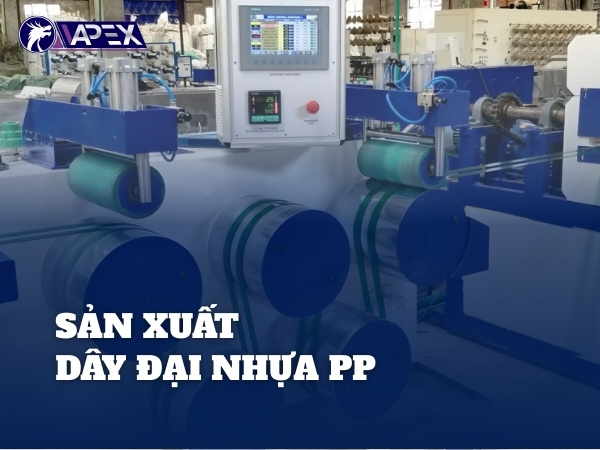
Packaging and logistics enterprises need a clear understanding of the nature of the PP plastic strapping production process in order to effectively control output quality and operational efficiency. From raw material selection and extrusion processing to finished product inspection, each stage has a direct impact on the stability and performance of the strapping during use. Let’s explore the detailed PP plastic strapping production process with APEX Vietnam in the article below!
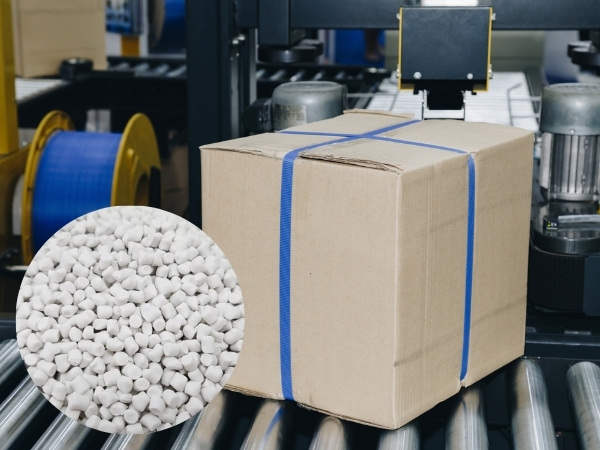
PP strapping bands possess high mechanical strength
Raw Materials for PP Plastic Strapping Production
PP plastic strapping is a packaging material made from polypropylene (PP), featuring good flexibility, high mechanical strength, moisture resistance, and low density. It is commonly used for tightening and securing carton boxes and goods during storage, handling, and transportation.PP strapping bands possess high mechanical strength
The input materials for PP plastic strapping production include virgin PP resin pellets or recycled PP pellets. During the compounding process, manufacturers may add functional additives to enhance mechanical properties, ensuring the strapping meets usage requirements under specific operating conditions.
Outstanding Technical Characteristics of PP Plastic Strapping: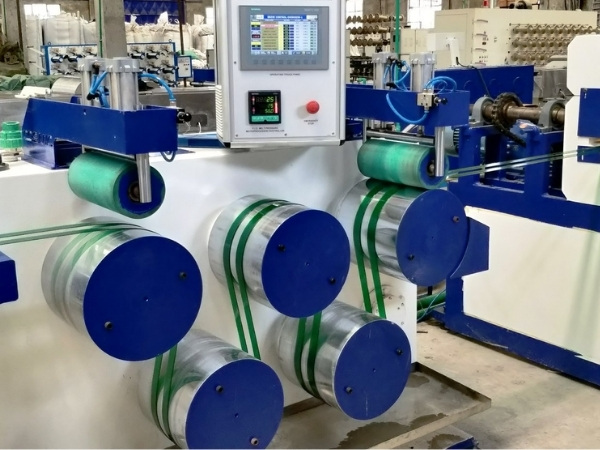
The thickness of the strapping typically ranges from 0.5 to 1.5 mm, depending on the application
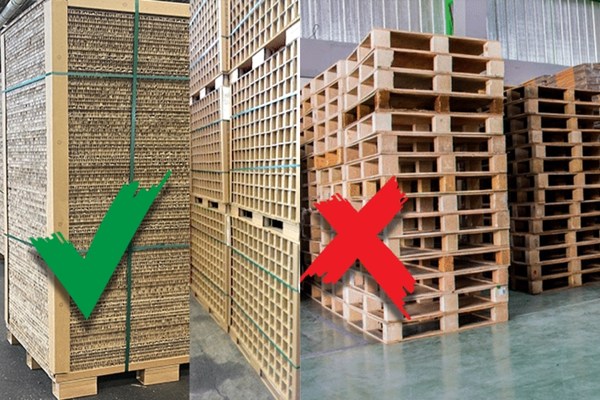
Applications of PP strapping bands in industry
Technical Characteristics of APEX PP Filler Masterbatch
With high-quality PP Filler Masterbatch solutions, APEX Vietnam is committed to providing businesses with stable raw material supply, high customization capability, and continuous technical support - contributing to improved finished strapping quality and long-term cost optimization for PP plastic strapping production. Do not hesitate to contact us today for more detailed product consultation!
Outstanding Technical Characteristics of PP Plastic Strapping:
- Tensile strength: PP plastic features good mechanical strength, allowing the strapping to maintain stability and minimize the risk of breakage when tightly securing goods.
- High elasticity: PP strapping has a reasonable elongation rate, helping to firmly hold packages without causing deformation to the packaging or the products inside.
- Water and chemical resistance: PP is minimally affected by moisture, oils, and many common chemicals, making it suitable for warehouse storage and transportation environments.
- Lightweight: Contributes to reducing the overall load of packages, supporting faster packing operations and lowering logistics costs.
- Cost-effectiveness: Compared to PET plastic strapping, PP strapping has a lower cost while still meeting standard packaging requirements and ensuring sufficient durability.
PP Plastic Strapping Production Process
Each stage in the PP plastic strapping production process plays a decisive role in determining the final strapping quality, from raw material selection and processing to forming, inspection, and packaging.Preparation of PP Plastic Raw Materials
The materials used in PP plastic strapping production are polypropylene (PP) resin pellets, which may include virgin PP, recycled PP, or a blend of both, depending on technical requirements and production cost orientation. In addition, a small amount of specialized additives may be incorporated to enhance performance characteristics, such as colorants, thermal stabilizers, UV resistance additives, and others.Heating and PP Plastic Extrusion
After preparation, the PP resin pellets are fed into a screw extruder, where the plastic is heated (approximately 180 – 230°C) and transformed into a molten state. During this process, the molten PP is uniformly mixed with additives to ensure consistent color, flexibility, and mechanical properties of the strapping. The extrusion stage plays a critical role in determining the material structure, thickness, and surface quality of PP plastic strapping.Forming of PP Plastic Strapping
The molten PP is forced through a forming die to create strapping strands with defined dimensions. The strapping thickness typically ranges from 0.5 to 1.5 mm, depending on the intended application. The strapping width is designed to be compatible with semi-automatic or fully automatic strapping machines. After exiting the die, the strapping passes through a water or air cooling system to stabilize and fix the material structure.The thickness of the strapping typically ranges from 0.5 to 1.5 mm, depending on the application
Rolling and Stretching of PP Strapping
Rolling and stretching of PP strapping is a crucial stage to enhance tensile strength and load-bearing capacity of the strapping.- Strapping rolling: Helps create a flat and uniform surface, improving aesthetic appearance and ensuring stability during use.
- Oriented stretching: The strapping is stretched longitudinally at a specified ratio, allowing PP polymer molecules to realign, thereby increasing tensile strength and reducing unwanted elongation.
Cutting and Winding of Finished PP Strapping
Once the strapping meets technical specifications, it is cut to standard lengths and wound into individual rolls. The winding process is carefully controlled in terms of tension to prevent deformation or cracking of the strapping.- Small rolls: Typically ranging from 5 to 10 kg, suitable for handheld or semi-automatic strapping machines.
- Large rolls: Ranging from 20 to 50 kg, used for automatic strapping lines in industrial factories.
Quality Inspection of PP Plastic Strapping
Before shipment, PP plastic strapping is inspected according to standard technical criteria, including tensile strength, elongation, thickness and width, surface uniformity, heat resistance, and moisture resistance. Products that fail to meet the required specifications are sorted for recycling, ensuring they do not affect the quality of the shipment batch.Packaging and Shipment
After inspection, PP plastic strapping is packaged according to standard specifications, such as rolls wrapped in plastic film or woven bags, and stacked on pallets for large-volume orders. The finished products are stored in warehouses or dispatched from the factory, ready to be supplied to packaging, manufacturing, and logistics units.Practical Applications of PP Plastic Strapping
PP plastic strapping is manufactured on modern industrial production lines and is a widely used packaging solution across many industries thanks to its lightweight structure, stable load-bearing capacity, and reasonable cost.- In industrial packaging, PP strapping is used to tightly secure and stabilize packages, components, semi-finished products, and finished goods within factories.
- In transportation and logistics, PP plastic strapping is applied for pallet strapping of bricks, tiles, wooden products, and for securing agricultural produce and seafood on trucks or in containers. It is also widely used in the packaging of parcels, newspapers, and large-volume distributed goods.
- In e-commerce, PP strapping helps reinforce shipments, ensuring the rigidity and integrity of carton boxes throughout the delivery process, especially for long-distance transportation or multi-stage handling.
- In manufacturing and processing activities, PP plastic strapping is used to bundle protective packaging for windows and doors, secure coils, metal pipes, wooden bars, and bundled or rolled materials, contributing to more efficient storage and transportation of semi-finished products.
- In certain specialized sectors, PP strapping is used for bundling straw, vegetables, and fruits in agriculture. With high-quality PP strapping that meets strict quality control standards, the product can also be applied in the medical field.
Applications of PP strapping bands in industry
PP Filler Masterbatch – The Key to Enhancing Strapping Quality
PP Filler Masterbatch supplied by APEX Vietnam is specifically developed for PP plastic strapping production applications. Using APEX’s technically standardized PP filler masterbatch helps finished strapping achieve high stability and consistent quality across production batches, while significantly reducing raw material costs without affecting production line performance.Technical Characteristics of APEX PP Filler Masterbatch
- Base material: Carefully selected and strictly controlled polypropylene (PP), highly compatible with PP strapping extrusion and stretching processes.
- Filler material: Ultra-fine calcium carbonate (CaCO₃) powder with an average particle size ranging from 1.8 to 3.3 μm, ensuring uniform dispersion within the polymer matrix.
- High filler content: CaCO₃ content reaches 75 – 88%, helping optimize material costs while maintaining the essential mechanical properties of the strapping.
- High stability: The filler masterbatch offers excellent flowability and minimizes phase separation, enabling stable extrusion and reducing material loss during PP plastic strapping production.
With high-quality PP Filler Masterbatch solutions, APEX Vietnam is committed to providing businesses with stable raw material supply, high customization capability, and continuous technical support - contributing to improved finished strapping quality and long-term cost optimization for PP plastic strapping production. Do not hesitate to contact us today for more detailed product consultation!