
BLOG
- Home
- Blog
- Plastic Polymer Composite Article
- HDPE vs PET Plastic: Which is the choice for manufacturing?
HDPE vs PET Plastic: Which is the choice for manufacturing?
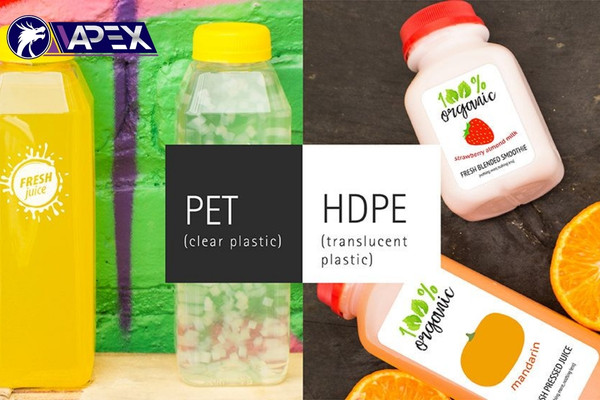
HDPE vs PET plastic are the two most widely used thermoplastic materials in industrial and consumer packaging manufacturing today. Each type of plastic possesses distinct chemical and physical properties designed to meet the stringent demands of the consumer market. APEX Vietnam provides this article to help businesses fully understand the nature of each material before making production investment decisions.
What is HDPE plastic?
HDPE (High-Density Polyethylene) is a thermoplastic polymer produced from ethylene monomers. It is a plastic well known for its high molecular density, which creates a strong, stable structure with minimal branching.
- Identification: Typically opaque in color, with a slightly rough surface and high toughness.
- Symbol: The number 2 inside the recycling triangle.
- Practical Applications: HDPE has excellent chemical resistance and is therefore commonly used for shampoo bottles, milk containers, water pipes, and various types of industrial waste bins.

HDPE plastic has good chemical resistance
What is PET plastic?
PET (or PETE - Polyethylene Terephthalate) is the world's most popular plastic, belonging to the polyester family. When comparing HDPE vs PET plastic, PET is favored for its perfect glass-like transparency.
- Identification: Transparent, with a smooth, glossy surface and excellent ability to block oxygen and moisture penetration.
- Symbol: The number 1 inside the recycling triangle.
- Practical Applications: PET plastic has extremely high transparency, making it ideal for producing mineral water bottles, carbonated beverage containers, and single-use food containers.

PET plastic is favored for its outstanding transparency
Comparing HDPE vs PET plastic
The process of comparing HDPE vs PET plastic requires careful analysis of technical parameters ranging from toughness to surface aesthetics. Businesses need to understand the core differences to optimize their packaging processes and maintain long-term product quality.
Physical properties of PET and HDPE
Physical characteristics such as light transmittance and surface hardness define the external appearance of plastic packaging. The difference in molecular structure between PET and HDPE produces entirely different visual and tactile experiences for users.
- Aesthetics: PET plastic provides a glossy, glass-like transparent surface, while HDPE plastic delivers a matte surface that feels slightly rough to the touch.
- Hardness: HDPE plastic offers greater toughness and compression resistance than PET, helping containers maintain their original shape under significant external force.
- Weight: PET plastic is very lightweight, helping reduce shipping costs for large-volume packaging orders.
|
|
|
|
|
|
|
|
|
|
|
|
|
|
|
|
|
|
|
|
|
|
|
|
Temperature range
The ability of HDPE vs PET plastic to withstand ambient temperatures is an important factor that directly affects the safety and durability of containers. Manufacturers need to consider the actual storage conditions of their products to prevent mechanical deformation or chemical migration.
|
|
|
|
|
|
|
|
|
|
|
|
|
|
|
|
|
|
|
|
Environmental stress crack resistance (ESCR)
Environmental Stress Crack Resistance (ESCR) is the ability of a plastic material to resist cracking when simultaneously exposed to chemical agents (detergents, solvents, greases) and mechanical stress (pressure, bending).
HDPE has significantly better ESCR than PET in most common chemical environments. Specifically:
- HDPE withstands dilute acids, alkalis, alcohols, and salts without cracking.
- PET is more sensitive to strong alkalis (which can cause hydrolysis of the polyester chain) and certain organic solvents.
However, it should be noted that certain aromatic hydrocarbons (xylene, toluene) and strong oxidizing agents can also cause ESCR issues in HDPE.

Comparison of properties and characteristics between HDPE and PET plastic.
Practical rule: If the application involves chemicals, always consult the chemical resistance chart for the specific plastic type before making a decision.
Recyclability
Both HDPE vs PET plastic are recyclable and represent the two plastic types with the most developed global collection and recycling systems.
PET (#1) - The world's leading recycled plastic:
- PET is the most recycled material among plastics (especially PET water bottles).
- Recycled products from PET (rPET) are used to make polyester fiber, new bottles, geotextile liners, and construction materials.
- PET collection and recycling rates in many countries reach 40–70%, higher than most other plastic types.
HDPE (#2) - Durable and recyclable multiple times:
- HDPE is easy to recycle and loses less quality with each recycling cycle compared to PET.
- Recycled products from HDPE (rHDPE) include plastic pipes, parking lots, outdoor furniture, and industrial containers.
- HDPE can be recycled more times without significant deterioration in mechanical properties.
|
|
|
|
|
|
|
|
|
|
|
|
|
|
|
|
|
|
|
|
Choosing between HDPE vs PET Plastic
Selecting the right material not only helps businesses save on investment costs but also enhances brand competitiveness in the market. The summary table of HDPE vs PET plastic below will give partners the most comprehensive overview to make a sound and accurate purchasing decision.
|
|
|
|
|
|
|
|
|
|
|
|
|
|
|
|
|
|
|
|
|
|
|
|
|
|
|
|
|
|
|
|
Based on the summary parameters above, APEX Vietnam suggests the following specific application areas to help you choose quickly:
Choose HDPE when:
- You need pipes for water, gas, or chemical transport.
- The product will be exposed to outdoor environments long-term (UV, temperature fluctuation).
- Storing detergents, lubricants, or industrial chemicals.
- A material with deep cold resistance is needed (-60°C to -100°C).
- The application requires high impact resistance and transparency is not necessary.
- Producing agricultural packaging, industrial bins, or pallets.

Choose HDPE or PET plastic based on your needs and application scenario.
Choose PET when:
- Transparent packaging is needed to display products.
- Storing food and beverages (water bottles, sauce bottles, food containers).
- Maximum lightweight with high tensile strength is required.
- The product requires clear, sharp direct printing or labeling.
- Applications for protective films or flexible packaging.
- The project emphasizes sustainability with rPET (recycled PET resin).
The differences between HDPE vs PET plastic directly shape the efficiency of modern packaging production processes. Choosing the right virgin resin grade ensures consistent finished product quality and maximizes operational cost savings for businesses. APEX Vietnam specializes in supplying premium plastic resin with a team of experts always ready to recommend optimal material solutions tailored to each customer's actual needs. Contact us now at 02743620911 to receive a quote and a detailed consultation.