
NEWS & EVENTS

- Home
- News
- Products Information
- Benefits of Using Calcium Carbonate Filler in Nonwoven Fabrics
Benefits of Using Calcium Carbonate Filler in Nonwoven Fabrics
January 28,2026
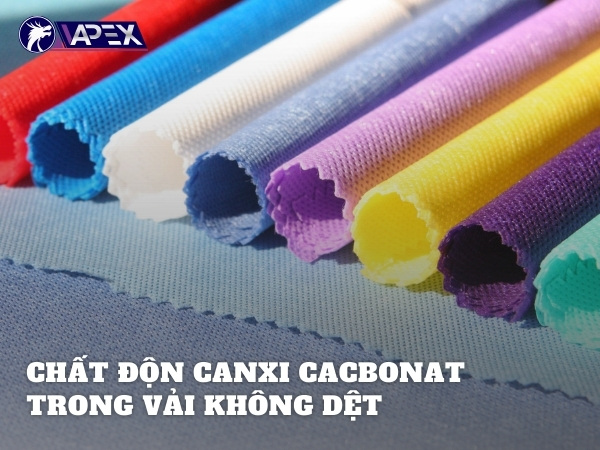
Calcium carbonate filler in nonwoven fabrics is gaining increasing attention from manufacturers thanks to its ability to enhance material structure, stabilize processing operations, and optimize polymer utilization efficiency. The article below provides an in-depth analysis of the characteristics, benefits, and applications of calcium carbonate filler, helping businesses establish a solid technical basis for selecting suitable raw materials.
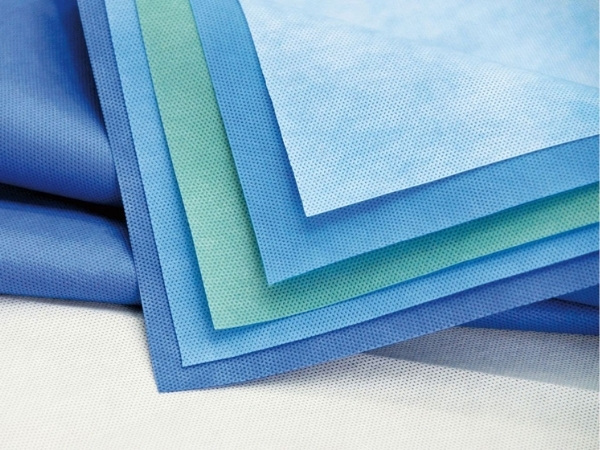
Non-woven fabric is a material formed by directly bonding fibers together
What Are Nonwoven Fabrics?
Nonwoven fabrics are materials formed by directly bonding short or long fibers through mechanical, thermal, or chemical methods, without using traditional weaving or knitting techniques. Nonwoven fabrics are characterized by their lightweight and porous structure, with mechanical strength that can be flexibly adjusted depending on the production technology. They can be engineered for single-use applications or for long-term use, depending on specific performance requirements.Non-woven fabric is a material formed by directly bonding fibers together
To optimize costs and material properties, calcium carbonate (CaCO3) fillers are used in the production of non-woven fabrics. This filler is typically a blend of CaCO3 powder, carrier resin (PP/PE), and specialized additives. It helps reduce polymer consumption, increase thickness, and improve the structural stability and processing efficiency of the non-woven products.
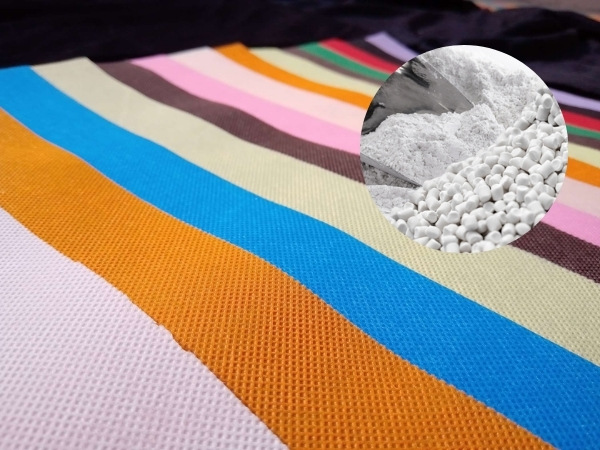
The calcium carbonate filler meets the requirements for dispersibility
CaCO₃ helps increase the structural density of nonwoven fabrics. When evenly dispersed within the base polymer, this filler supports stress transfer and distribution, thereby enhancing tensile strength and overall mechanical stability without significantly reducing flexibility.
Increased stiffness and dimensional stability
The addition of CaCO₃ increases the elastic modulus of the material, improving stiffness and shape retention of nonwoven fabrics. This is particularly important for products that require high stability, such as technical textiles, medical fabrics, or industrial lining materials.
Enhanced processability
Calcium carbonate filler helps stabilize melt flow during extrusion and fiber formation. As a result, processing becomes more stable, melt flow fluctuations are reduced, surface defects are minimized, and the uniformity of the final product is improved.
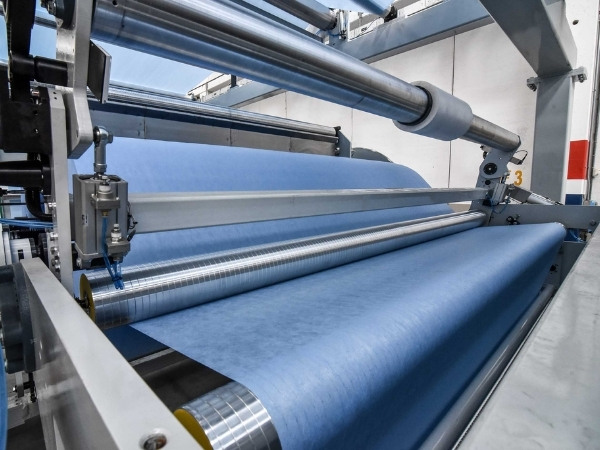
The calcium carbonate filler helps stabilize the melt flow during the production process
Calcium carbonate is a low-cost filler with a stable supply, allowing for the partial replacement of polymer resins in the formulation. This reduces raw material input costs while maintaining the essential technical properties of the non-woven fabric.
Optimized Polymer Utilization Efficiency
By improving the fabric's structure and stability, CaCO₃ enables manufacturers to reduce the polymer ratio per unit of product. This not only enhances economic efficiency but also contributes to lower plastic resource consumption, aligning with sustainable manufacturing trends.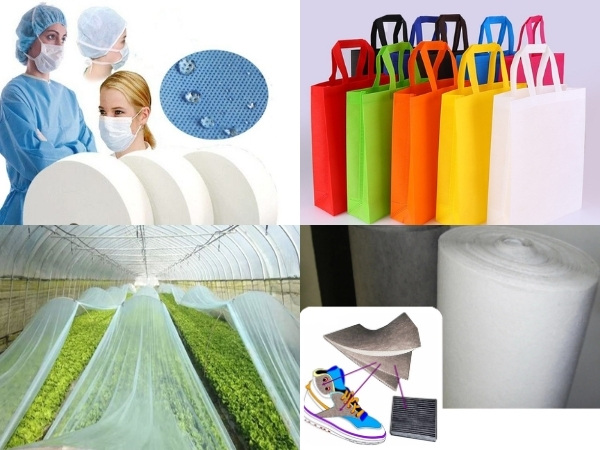
Calcium carbonate filler is applied across many manufacturing industries
Characteristics of Calcium Carbonate Filler in Nonwoven Fabrics
Calcium carbonate filler in nonwoven fabrics is a material with stable technical specifications, meeting requirements for dispersion capability, purity, and compatibility with the base resin during polymer processing.- High CaCO₃ content: Ranging from 80 – 88%, allowing a significant reduction in base resin usage and contributing to optimized raw material costs in nonwoven fabric production.
- Stable particle size: An average particle size of 1.8 – 2.3 µm enables CaCO₃ to disperse evenly within the polymer, limiting agglomeration and reducing the risk of surface defects or fiber breakage.
- Appropriate melt flow index: Melt flow index at 190℃/2.16 kg < 3 g/10 minutes, ensuring stable flow during extrusion, fiber spinning, or nonwoven web formation.
- High material density: Density ranging from 1.9 – 2.2 g/cm³ helps increase fabric thickness and coverage without significantly affecting mechanical stability.
- Very low moisture content: Moisture level < 0.25%, which helps minimize air bubbles, polymer degradation, and surface defects during continuous processing.
The calcium carbonate filler meets the requirements for dispersibility
Benefits of Using Calcium Carbonate Filler in Nonwoven Fabrics
The incorporation of calcium carbonate filler in nonwoven fabrics delivers combined benefits in both technical performance and economic efficiency, especially in large-scale industrial production lines.Technical Benefits
Improved mechanical strengthCaCO₃ helps increase the structural density of nonwoven fabrics. When evenly dispersed within the base polymer, this filler supports stress transfer and distribution, thereby enhancing tensile strength and overall mechanical stability without significantly reducing flexibility.
Increased stiffness and dimensional stability
The addition of CaCO₃ increases the elastic modulus of the material, improving stiffness and shape retention of nonwoven fabrics. This is particularly important for products that require high stability, such as technical textiles, medical fabrics, or industrial lining materials.
Enhanced processability
Calcium carbonate filler helps stabilize melt flow during extrusion and fiber formation. As a result, processing becomes more stable, melt flow fluctuations are reduced, surface defects are minimized, and the uniformity of the final product is improved.
The calcium carbonate filler helps stabilize the melt flow during the production process
Economic Benefits
Reduced Raw Material CostsCalcium carbonate is a low-cost filler with a stable supply, allowing for the partial replacement of polymer resins in the formulation. This reduces raw material input costs while maintaining the essential technical properties of the non-woven fabric.
Optimized Polymer Utilization Efficiency
By improving the fabric's structure and stability, CaCO₃ enables manufacturers to reduce the polymer ratio per unit of product. This not only enhances economic efficiency but also contributes to lower plastic resource consumption, aligning with sustainable manufacturing trends.
Applications of Nonwoven Fabrics Containing Calcium Carbonate Filler
Thanks to their ability to improve material structure and optimize costs, nonwoven fabrics containing calcium carbonate filler in nonwoven fabrics are widely applied across various manufacturing sectors.- Applications in healthcare and medical fields: Used in the production of face masks, medical pads, bandages, and single-use protective materials.
- Applications in industry: Applied in industrial packaging, lining materials, thermal insulation materials, filters, and other technical products.
- Applications in agriculture: Used for mulch films, shading nets, crop protection materials, and agricultural product packaging.
- Applications in daily life and consumer goods: Shopping bags, shoe insoles, interior lining materials, and various household products.
Calcium carbonate filler is applied across many manufacturing industries
APEX Vietnam Supplies CaCO₃ for Nonwoven Fabric Manufacturers
With nearly 10 years of experience in supplying calcium carbonate to the materials and plastics industries, APEX Vietnam not only provides products but also partners with businesses to optimize compounding formulations, stabilize production lines, and improve the overall efficiency of nonwoven fabric manufacturing. The CaCO₃ products distributed by APEX Vietnam offer the following key advantages:- Ultra-fine particle size: CaCO₃ features fine particle size with uniform particle distribution, creating a large specific surface area. This enhances dispersion in the base polymer and makes it suitable for nonwoven fabric applications that require high stability.
- Excellent covering capability: The filler effectively masks surface imperfections, improving structural uniformity and surface smoothness of nonwoven fabric products.
- Superior dispersion performance: Thanks to its fine particle structure and high purity, APEX Vietnam’s CaCO₃ shows good compatibility with polymers, supporting stable processing and increasing production efficiency.
- Quality commitment: Equipped with modern production lines and an in-house research and development department, ensuring consistent and uniform product quality.
- Competitive pricing: A well-controlled supply source helps optimize costs for nonwoven fabric manufacturers.
- Ability to meet large-volume orders: Strong supply capacity ensures on-time delivery even for large orders within short lead times.
- Flexible delivery: A diverse transportation fleet enables direct delivery to customers’ factories nationwide.