
BLOG

- Home
- Blog
- Powders Article
- Important Applications of Calcium Carbonate Powder in Paper Manufacturing
Important Applications of Calcium Carbonate Powder in Paper Manufacturing
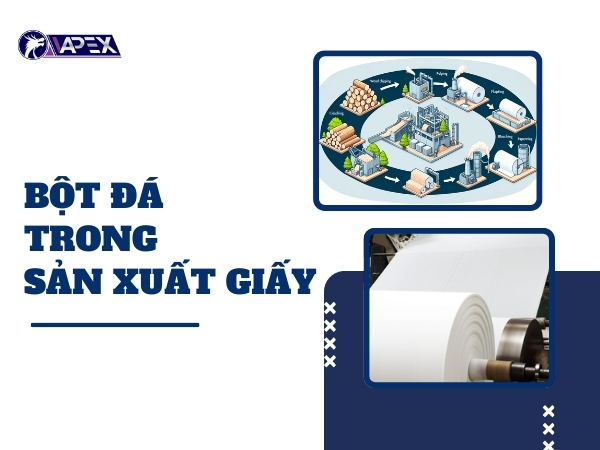
Nhờ các đặc tính quang học và vật lý ổn định, bột canxi cacbonat được sử dụng rộng rãi trong sản xuất giấy như một chất độn và vật liệu phủ bề mặt, đáp ứng các yêu cầu về độ trắng, độ mịn, khả năng in ấn và hiệu quả kinh tế. Hãy cùng APEX Việt Nam khám phá những lợi ích, ứng dụng và những lưu ý quan trọng khi sử dụng bột canxi cacbonat, giúp doanh nghiệp kiểm soát chất lượng giấy một cách hiệu quả.

CaCO₃ giúp cải thiện độ trắng của giấy

CaCO₃ helps improve printability, allowing printed images to achieve better ink adhesion

CaCO₃ is used as a filler and surface coating material in paper manufacturing

The mineral powder content should be adjusted to each paper grade
APEX vận hành một nhà máy hiện đại rộng 30.000 m² tại Bình Dương, được đầu tư toàn diện với 8 dây chuyền sản xuất bột canxi cacbonat, bao gồm canxi cacbonat nhẹ, canxi cacbonat nghiền và canxi cacbonat biến tính. Hệ thống sản xuất kiểm soát chặt chẽ kích thước hạt, độ tinh khiết và tính nhất quán giữa các lô hàng.
Ngoài ra, APEX vận hành 2 dây chuyền sản xuất masterbatch (masterbatch CaCO₃ và masterbatch PVC) cùng với 1 dây chuyền sản xuất túi PP dệt, đạt tổng công suất 40.000 tấn bột khoáng và 8.000 tấn masterbatch mỗi tháng. Khả năng này cho phép APEX duy trì nguồn cung ổn định, linh hoạt đáp ứng các đơn hàng lớn và đáp ứng các yêu cầu kỹ thuật khắt khe từ cả khách hàng trong và ngoài nước.
Khi lựa chọn đúng chất lượng, kiểm soát liều lượng chính xác và điều chỉnh cách sử dụng cho từng dòng sản phẩm, bột khoáng có thể cải thiện đáng kể chất lượng giấy đồng thời tối ưu hóa chi phí nguyên vật liệu. Liên hệ APEX Việt Nam ngay hôm nay để được tư vấn chi tiết về bột canxi cacbonat trong sản xuất giấy !
Lợi ích của việc sử dụng bột canxi cacbonat trong sản xuất giấy
Trong sản xuất giấy hiện đại, bột canxi cacbonat được coi là một trong những nguyên liệu phụ trợ quan trọng nhất, góp phần tối ưu hóa cả chất lượng sản phẩm và hiệu quả kinh tế.Cải thiện độ trắng của giấy
Bột canxi cacbonat có chỉ số khúc xạ cao và khả năng phản xạ ánh sáng tuyệt vời, nhờ đó tăng cường độ trắng và độ sáng của giấy. Kích thước hạt CaCO₃ càng nhỏ, hiệu quả phản xạ ánh sáng càng cao. Việc kiểm soát đúng mức độ mịn và phân tán của bột canxi cacbonat trong sản xuất giấy là yếu tố then chốt để cải thiện độ trắng của sản phẩm giấy thành phẩm.CaCO₃ giúp cải thiện độ trắng của giấy
Tăng độ mịn và độ bóng của bề mặt
Canxi cacbonat (CaCO₃) có cấu trúc hạt mịn và bề mặt tương đối phẳng, giúp lấp đầy các khoảng trống giữa các sợi xenluloza. Kết quả là, bề mặt giấy trở nên mịn hơn, độ xốp giảm và độ bóng bề mặt được cải thiện. Khi được sử dụng làm chất độn hoặc trong các lớp phủ, bột canxi cacbonat trong sản xuất giấy tạo thành một lớp phân bố đồng đều trên bề mặt giấy, tối ưu hóa các đặc tính bề mặt để đáp ứng yêu cầu của từng loại giấy.Improving Paper Stiffness and Structural Stability
The addition of CaCO₃ helps improve paper stiffness, dimensional stability, and compressive strength. However, it should be noted that the CaCO₃ content must be properly controlled, as excessive use may reduce fiber–fiber bonding between cellulose fibers and negatively affect tensile strength.Enhancing Printability
Calcium carbonate powder in paper manufacturing improves ink receptivity, limits uncontrolled ink penetration, and enhances the sharpness of printed images. This is particularly important for printing technologies such as offset printing and inkjet printing.CaCO₃ helps improve printability, allowing printed images to achieve better ink adhesion
Reducing Production Costs
CaCO₃ is significantly more cost-effective than cellulose fiber derived from wood. Using mineral powder to partially replace fibers helps reduce raw material costs while increasing production efficiency and still meeting quality requirements. This is one of the key economic benefits that makes mineral powder widely used in the paper industry.Environmental Protection
Reducing the proportion of cellulose helps limit wood harvesting and alleviate pressure on forest resources. In addition, CaCO₃ is an inert, safe, non-toxic, and environmentally friendly material. In many modern processes, the use of mineral powder also helps reduce the need for certain processing chemicals, thereby contributing to lower environmental impacts in paper manufacturing.Applications of Calcium Carbonate Powder in Paper Manufacturing
Calcium carbonate powder in paper manufacturing is widely used in the paper industry as a filler and surface coating material, contributing to the improvement of finished paper quality such as whiteness, smoothness, gloss, and printability.- As a filler: In the paper structure, CaCO₃ powder is added to increase sheet weight without excessively increasing thickness. Replacing part of the cellulose fibers with CaCO₃ helps manufacturers optimize raw material costs while still meeting requirements for appearance and structural stability of paper products.
- As a surface coating: CaCO₃ is also used in the paper coating process to create a smooth and uniform surface layer. Paper coated with CaCO₃ typically has a brighter surface, allowing ink to adhere better, making it especially suitable for color printing applications.
CaCO₃ is used as a filler and surface coating material in paper manufacturing
Types of Paper Using Calcium Carbonate Powder in Manufacturing
Depending on the intended use and quality requirements, CaCO₃ can be added to the paper core or surface coating layer in the following types of paper:- Printing and writing paper: CaCO₃ enhances paper whiteness and provides a smoother surface; it is widely used for books, notebooks, office documents, and general printing products.
- Photocopy paper: Helps limit ink absorption and ink bleeding during printing. As a result, the paper achieves high stability for duplex printing and performs well on high-speed printing machines.
- Carton and packaging paper: CaCO₃ increases sheet stiffness, making it suitable for carton products, paper boxes, and industrial packaging applications.
- Art paper and magazine printing paper: Improves image sharpness, delivers accurate and vivid colors with greater depth; commonly used for magazines, catalogs, brochures, and high-end advertising publications.
Important Considerations When Using Mineral Powder in Paper Production
To ensure that calcium carbonate powder in paper manufacturing delivers stable and consistent performance, manufacturers need to pay close attention to the following factors:Selecting the Source and Quality of Mineral Powder
Choosing CaCO₃ mineral powder from reputable suppliers with clear and traceable origins is a fundamental factor in maintaining stable paper quality. Manufacturers should focus on technical parameters such as particle size, purity, impurity content, and consistency between production batches. Variations in mineral powder quality can directly affect the quality of the finished paper.Controlling Mineral Powder Content in the Paper Formulation
The CaCO₃ content must be determined according to each product line and intended application. Excessive use may reduce drainage efficiency and negatively affect the paper-forming process. Conversely, if the content is too low, the functional role of CaCO₃ in the paper structure cannot be fully realized.The mineral powder content should be adjusted to each paper grade
Ensuring Proper Dispersion and Uniform Mixing of Mineral Powder
CaCO₃ mineral powder must be evenly dispersed throughout the pulp system to ensure stable distribution across the entire paper sheet. Inadequate mixing or dispersion can lead to agglomeration and uneven distribution, resulting in surface defects or inconsistent paper quality.Evaluating Compatibility with Other Chemicals
When incorporating CaCO₃ into the production formulation, it is necessary to assess the compatibility of the mineral powder with other chemicals in use, such as bleaching agents, binders, retention aids, or other additives. Undesirable reactions or interactions may reduce the effectiveness of CaCO₃ or negatively affect the stability of the pulp system.Complying with Safety and Environmental Regulations
Fine mineral powder may pose health risks if inhaled over prolonged periods; therefore, appropriate protective equipment must be provided for workers. In addition, transportation, storage, and handling of mineral powder should be strictly controlled to minimize potential impacts on the surrounding environment.APEX Vietnam – A Reliable Supplier of Mineral Powder for the Paper Industry at Competitive Prices
APEX Việt Nam là một trong những nhà sản xuất canxi cacbonat quy mô lớn tại Việt Nam, cung cấp các giải pháp bột khoáng chuyên dụng cho ngành công nghiệp giấy. Với đội ngũ kỹ thuật giàu kinh nghiệm và hệ thống sản xuất tích hợp, APEX Việt Nam không chỉ cung cấp nguyên liệu mà còn hợp tác chặt chẽ với khách hàng để tối ưu hóa công thức, ổn định quy trình sản xuất và nâng cao giá trị sản phẩm.APEX vận hành một nhà máy hiện đại rộng 30.000 m² tại Bình Dương, được đầu tư toàn diện với 8 dây chuyền sản xuất bột canxi cacbonat, bao gồm canxi cacbonat nhẹ, canxi cacbonat nghiền và canxi cacbonat biến tính. Hệ thống sản xuất kiểm soát chặt chẽ kích thước hạt, độ tinh khiết và tính nhất quán giữa các lô hàng.
Ngoài ra, APEX vận hành 2 dây chuyền sản xuất masterbatch (masterbatch CaCO₃ và masterbatch PVC) cùng với 1 dây chuyền sản xuất túi PP dệt, đạt tổng công suất 40.000 tấn bột khoáng và 8.000 tấn masterbatch mỗi tháng. Khả năng này cho phép APEX duy trì nguồn cung ổn định, linh hoạt đáp ứng các đơn hàng lớn và đáp ứng các yêu cầu kỹ thuật khắt khe từ cả khách hàng trong và ngoài nước.
Khi lựa chọn đúng chất lượng, kiểm soát liều lượng chính xác và điều chỉnh cách sử dụng cho từng dòng sản phẩm, bột khoáng có thể cải thiện đáng kể chất lượng giấy đồng thời tối ưu hóa chi phí nguyên vật liệu. Liên hệ APEX Việt Nam ngay hôm nay để được tư vấn chi tiết về bột canxi cacbonat trong sản xuất giấy !
Article Classification
Recent Articles
- Comparing Talc and Calcium Carbonate Powder in Plastic Formulations
- What Is Paint Viscosity? Influencing Factors and Control Methods
- Important Applications of Calcium Carbonate Powder in Paper Manufacturing
- Calcium Carbonate Powder in Rubber Manufacturing: Applications and Benefits
- Applications of CaCO₃ in Various Industries