
NEWS & EVENTS

- Home
- News
- Products Information
- What Is PE Packaging? Types of PE Plastic Packaging and Their Applications
What Is PE Packaging? Types of PE Plastic Packaging and Their Applications
March 10,2026
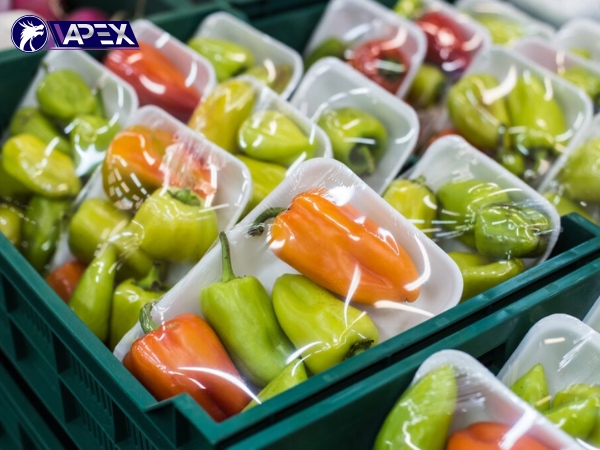
With stable mechanical properties and flexible processing capabilities, PE packaging is suitable for many operational models. In this article, APEX Vietnam provides information related to PE plastic packaging, introduces common PE material types, and outlines application directions to help businesses develop suitable packaging solutions.
PE packaging is characterized by its flexibility and high water resistance
Applications: Supermarket bags, heavy-duty shopping bags, industrial garbage bags, waste bags, packaging for frozen or dry foods, plastic bottles (for milk, detergent, chemicals), and more.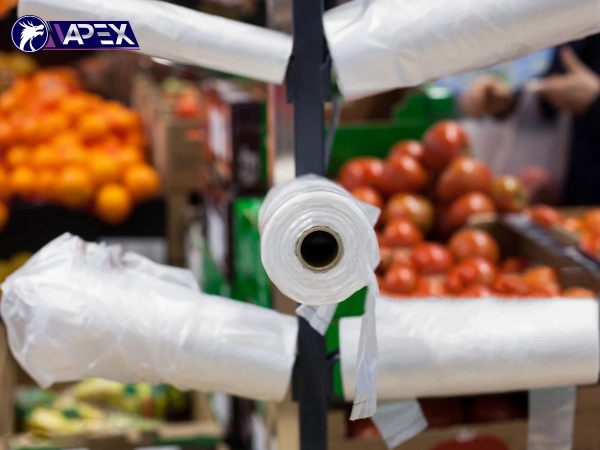
Túi siêu thị làm từ nhựa HDPE
Applications: Food wrapping films, zipper bags, self-adhesive bags, fashion packaging bags, product protection films, and soft plastic bags for consumer goods packaging,...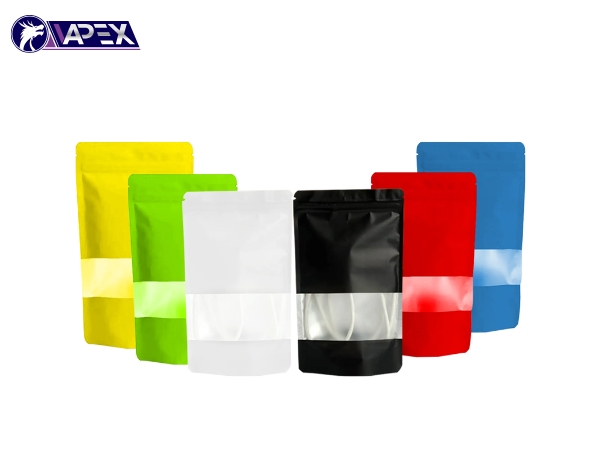
Zipper bags made from LDPE plastic
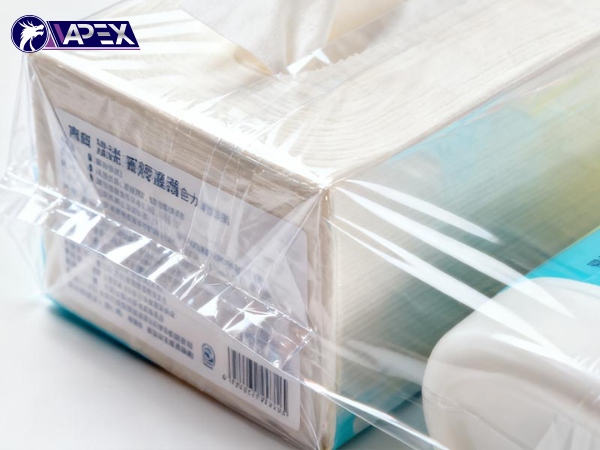
Applications: Shrink films, stretch films, heavy-duty packaging bags, and agricultural packaging materials,...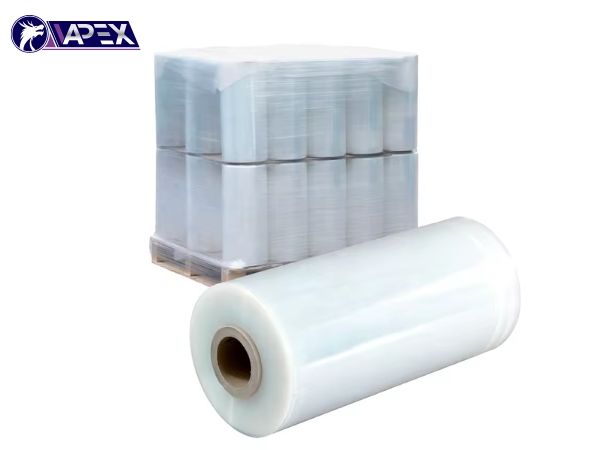
Stretch film made from LLDPE plastic
Applications: Packaging electronic components and microcircuits; protecting circuit boards and semiconductor chips; packaging high-tech products and specialized equipment,...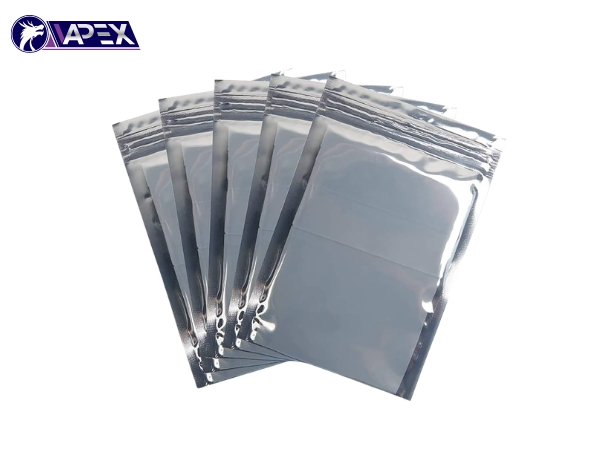
Anti-static PE packaging
When standard-quality raw materials are used, the plastic film maintains stable tensile strength, consistent thickness, and strong heat-sealing performance. The processing stages also run more smoothly, minimizing technical issues such as surface defects, film breakage, or deformation caused by shrinkage.
Today, many packaging manufacturers prefer sourcing PE resin from APEX Vietnam. In addition to standard product lines, APEX also develops customized compounding solutions tailored to each customer’s requirements, aligning with specific product characteristics, film blowing technologies, and cost optimization goals.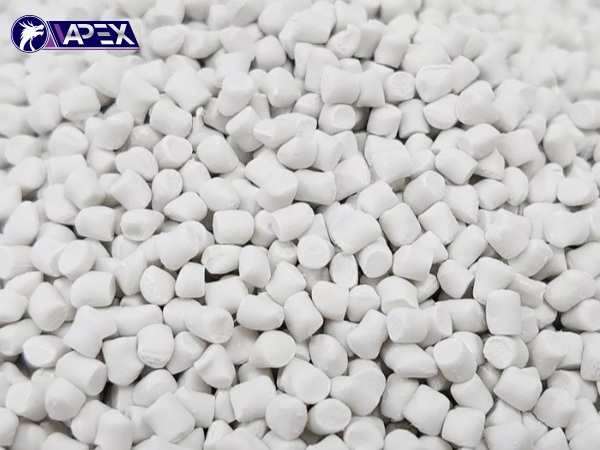
PE resin at APEX contains 75–88% calcium carbonate content
What Is PE Packaging?
PE packaging (Polyethylene packaging) is a type of plastic packaging produced from PE resin. It stands out for its flexibility, high toughness, and effective water resistance. PE packaging usually has a transparent or slightly opaque surface with a light gloss and is widely used for packaging food, cosmetics, electronic components, garments, and many other products.PE packaging is characterized by its flexibility and high water resistance
What Are the Advantages of PE Packaging?
In manufacturing and product distribution, PE packaging is increasingly preferred by businesses thanks to the following key benefits:- Effective product protection: Provides good water resistance while limiting dust and insect intrusion. Its flexibility and durability make the packaging resistant to tearing, helping reduce product damage during transportation.
- Optimized packaging and storage: Lightweight, easy to fold and stack, which helps save warehouse space. It can also integrate convenient features such as zip locks and carrying handles.
- Supports brand building: The smooth surface allows clear printing of logos and product information, helping improve brand recognition in the market.
- Reusable multiple times: The packaging can be reused for various purposes in daily use, contributing to waste reduction.
- Cost-effective: Offers competitive pricing compared to many other types of packaging, allowing businesses to optimize budgets while still ensuring practical functionality.
Types of PE Packaging and Their Specific Applications
PE packaging is classified into several types, such as HDPE, LDPE, LLDPE, VLDPE, and anti-static PE. Each type has distinct mechanical and physical properties—from rigidity and flexibility to strength and moisture resistance—making them suitable for different packaging purposes.HDPE Packaging
Characteristics: HDPE has a dense molecular structure, giving it excellent rigidity and high load-bearing capacity. Its surface is usually slightly opaque, with low elasticity, strong tear resistance, and high impact resistance. This type of plastic also has relatively good chemical resistance and performs well in humid environments.Applications: Supermarket bags, heavy-duty shopping bags, industrial garbage bags, waste bags, packaging for frozen or dry foods, plastic bottles (for milk, detergent, chemicals), and more.
Túi siêu thị làm từ nhựa HDPE
LDPE Packaging
Characteristics: LDPE has a looser molecular structure, making it softer and more transparent. It is easy to bend, easy to heat-seal, and has good moisture resistance, although its load-bearing and heat resistance are lower than HDPE.Applications: Food wrapping films, zipper bags, self-adhesive bags, fashion packaging bags, product protection films, and soft plastic bags for consumer goods packaging,...
Zipper bags made from LDPE plastic
LLDPE Packaging
Characteristics: LLDPE has a linear molecular structure that improves tensile strength and puncture resistance compared to LDPE. It is especially suitable for applications that require strong stretching performance.Applications: Shrink films, stretch films, heavy-duty packaging bags, and agricultural packaging materials,...
Stretch film made from LLDPE plastic
Anti-Static PE Packaging
Characteristics: Anti-static PE packaging is produced with anti-static additives or conductive layers to reduce the accumulation of electrical charges on the packaging surface. It often appears in light pink or silver colors, depending on the type.Applications: Packaging electronic components and microcircuits; protecting circuit boards and semiconductor chips; packaging high-tech products and specialized equipment,...
Anti-static PE packaging
Standard PE Packaging Production Process
The standard PE packaging production process consists of the following seven steps:- Raw material preparation and compounding: Virgin or recycled PE resin is carefully selected and then blended with additives at appropriate ratios. Depending on technical requirements, manufacturers may also add PE filler masterbatch to increase stiffness, improve opacity, or enhance other material properties.
- Extrusion and film blowing: The blended material is fed into an extruder and heated until it reaches a molten state. The molten plastic is forced through a die to form a thin tubular film, which is then inflated with air to achieve the required size and thickness.
- Cooling and film winding: After the film is formed, it is cooled using an air or water circulation system and then wound into large rolls for the next production stage.
- Product information printing (if required): The film rolls are passed through printing systems such as silk screen printing or gravure printing to apply logos, branding, and technical information according to customer requirements.
- Cutting, sealing, and bag forming: The film rolls are cut to standard sizes and then heat-sealed to create different bag formats such as side-seal bags, stand-up pouches, zipper bags, or industrial roll bags.
- Quality control (QC inspection): Finished products are inspected for criteria such as tensile strength, film thickness, seal strength, and printing quality before leaving the factory.
- Packaging and delivery: Qualified packaging products are packed according to specifications and delivered to customers, ensuring that product quality is maintained throughout storage and transportation.
The Importance of PE Resin in the Quality of Finished Packaging
In the PE packaging production process, stages such as material compounding, film extrusion and blowing, and cutting and sealing to form bags are all directly influenced by the quality of the input resin. The purity, stability, and dispersion capability of PE resin determine the uniformity of the film, its mechanical strength, and the overall stability of the finished packaging product.When standard-quality raw materials are used, the plastic film maintains stable tensile strength, consistent thickness, and strong heat-sealing performance. The processing stages also run more smoothly, minimizing technical issues such as surface defects, film breakage, or deformation caused by shrinkage.
Today, many packaging manufacturers prefer sourcing PE resin from APEX Vietnam. In addition to standard product lines, APEX also develops customized compounding solutions tailored to each customer’s requirements, aligning with specific product characteristics, film blowing technologies, and cost optimization goals.
PE resin at APEX contains 75–88% calcium carbonate content
The quality of finished PE packaging ultimately depends on the quality of its input materials. Partnering with reliable resin suppliers such as APEX provides a strong foundation for manufacturers to maintain stable film quality, improve productivity, and strengthen brand credibility in the market. Contact us today for consultation on the most suitable solution for your business.