
BLOG

- Home
- Blog
- Plastic Polymer Composite Article
- Understanding Common Plastic Quality Control Standards
Understanding Common Plastic Quality Control Standards
August 05,2026
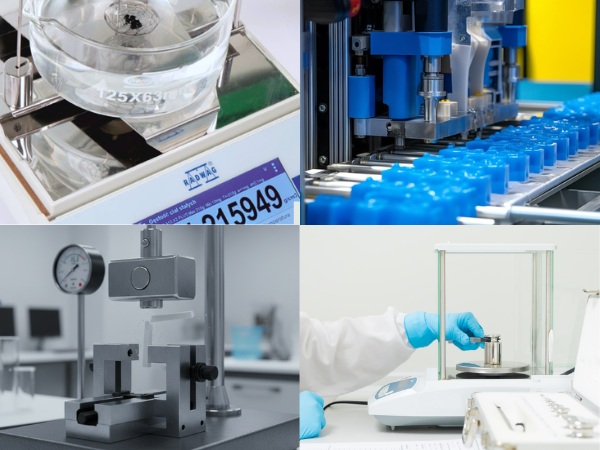
Plastic quality control standards are a framework that combines ISO, ASTM, JIS, and other quality systems with QC processes covering raw material inspection, production control, and finished product evaluation. These standards help ensure that plastic products are consistent, safe, and compliant with export requirements.
By understanding these standards, QC engineers, manufacturers, and project owners can establish or upgrade quality control systems that align with market requirements and industry expectations.
Common Plastic Quality Control Standards Used Today
Plastic quality control standards such as ISO, ASTM, JIS, and SAE are widely applied to evaluate, test, and certify plastic products for compliance with technical and regulatory requirements.
ISO
ISO (International Organization for Standardization) is an independent, non-governmental organization that develops and publishes standards to ensure plastic products meet quality, safety, and sustainability requirements. Several ISO standards commonly used in the plastics industry include:
- ISO 1183-1: Specifies methods for determining fundamental physical and mechanical properties of plastics, including density, tensile strength, and impact resistance.
- ISO 12215-1: Defines requirements for the design and construction of boats and vessels made from plastic materials.
- ISO 15223-1: Establishes labeling requirements for medical devices made from plastics, including usage information, manufacturer details, and related warnings.
- ISO 16072: Provides guidance for measuring and calculating carbon emissions generated throughout the life cycle of plastic products.
.jpg)
ISO establishes quality standards for plastic products
ASTM
ASTM International is a globally recognized standards organization that develops and publishes technical standards across various industries, including plastics. ASTM standards help accurately evaluate material properties, control product quality, and verify compliance with real-world performance requirements.
Some commonly applied ASTM standards for plastics include:
- ASTM D256: Determines the impact resistance of plastic materials.
- ASTM D792: Specifies methods for measuring density and specific gravity of plastics.
- ASTM D638: Evaluates tensile strength and elongation properties of plastic materials.
- ASTM D2240: Provides procedures for measuring the hardness of plastics based on indentation depth under a specified load.
- ASTM D882: Determines tear resistance and resistance to tear propagation in plastic films.
.jpg)
ASTM standards help accurately assess the properties of plastic materials.
JIS
JIS (Japanese Industrial Standards) is a standards system developed by the Japanese Industrial Standards Committee (JISC) to ensure quality, safety, and consistency across a wide range of industries, including plastics.
JIS standards are widely applied in Japan and are frequently referenced by international companies when evaluating plastic materials.
Key JIS standards include:
- JIS K 7100: Specifies labeling requirements for plastic products, including manufacturer information, material identification, and necessary warnings.
- JIS K 6724: Provides testing methods for evaluating the impact resistance of plastic materials.
- JIS K 6741: Assesses tensile strength and elongation properties under tensile loading.
- JIS K 6765: Specifies methods for determining the hardness of plastic materials.
- JIS K 6854: Evaluates heat resistance and thermal degradation characteristics of plastics.
.jpg)
JIS K 6765 specifies methods for determining the hardness of plastic materials.
SAE
SAE International is a leading standards organization for the automotive industry and other mobility engineering sectors. For plastic materials, SAE standards focus on evaluating the safety, durability, and performance of plastic components used in transportation applications.
Representative SAE standards include:
- SAE J1703: Specifies methods for testing the impact resistance of plastic fuel tanks.
- SAE J1704: Evaluates fuel vapor permeability through plastic materials used in fuel systems.
- SAE J2412: Determines flammability resistance and ignition characteristics of plastic materials.
- SAE J2530: Assesses the durability of automotive interior plastic components, including resistance to abrasion, fading, and aging.
.jpg)
SAE J2530 evaluates the durability of automotive interior plastic components.
Quality Indicators and Testing Methods for Plastic Materials
Plastic quality evaluation typically covers mechanical, chemical, thermal, and weathering performance characteristics. These properties are measured through standardized tests such as tensile, flexural, impact, MFI, and UV resistance testing to assess product durability and safety.
Plastic Surface Inspection
Surface inspection is an essential step in the plastic quality control process to ensure that products meet appearance, aesthetic, and consistency requirements.
Common surface inspection items include:
- Color consistency and uniformity
- Surface gloss or roughness according to design requirements
- Scratches, dents, voids, and air bubbles
- Flash, short shots, or dimensional defects
- Burn marks, weld lines, and flow marks
- Warpage, shrinkage, or deformation
Several plastic quality control standards commonly used for visual inspection include:
- ISO 2859-1: Sampling procedures and quality evaluation based on Acceptable Quality Levels (AQL).
- ASTM D1729: Evaluation of color and color differences under standardized lighting conditions.
- ASTM D523: Test method for measuring surface gloss.
- ASTM D4449: Guide for evaluating appearance and surface defects of plastic products.
Plastic Quality Control Process from Raw Materials to Finished Products
A standard plastic quality control process is typically divided into three stages: Incoming Quality Control (IQC), In-Process Quality Control (IPQC/PQC), and Final/Outgoing Quality Control (FQC/OQC).
Incoming Plastic Raw Material Quality Control (IQC)
The IQC stage begins before plastic raw materials are accepted into the warehouse. QC engineers should verify the Certificate of Origin (CO) and Certificate of Quality (CQ) provided by suppliers and compare them against established internal technical specifications.
For virgin plastic resins, key parameters that should be tested directly include Melt Flow Index (MFI), moisture content, color consistency, and foreign contaminants. For recycled plastic materials, additional evaluations should include contamination levels and thermal stability.
For Filler Masterbatch, key quality parameters such as CaCO₃ content, dispersion quality, and Melt Flow Index (MFI) compatibility with the base resin should be carefully verified. Acceptance and rejection criteria must be clearly documented in written specifications. In addition, a retained sample from each raw material batch should be stored for a minimum of 12 months to ensure full traceability in the event of quality issues or customer complaints.
In-Process Quality Control
During the IPQC (In-Process Quality Control) stage, engineers continuously monitor key injection molding or pipe extrusion parameters, including barrel zone temperatures, injection pressure, cycle time, and mold temperature. Inspection samples are collected at scheduled intervals—either hourly or based on production volume—to verify dimensions using calipers, assess visual appearance, and detect process deviations at an early stage.
A typical example: when the mold temperature rises abnormally. This can cause product deformation and sink marks on the finished part. Early detection through IPQC helps prevent large-scale defects and significantly reduces scrap rates.
.jpg)
Kỹ sư theo dõi liên tục các thông số máy để kiểm soát chất lượng sản xuất
Finished Product Inspection for Different Application Categories
The FQC/OQC stages involve comprehensive inspections before products are packaged and shipped.
- For consumer plastic products, the primary focus is on appearance, dimensional accuracy, and chemical safety compliance.
- For medical plastics, additional requirements include sterility testing and biocompatibility evaluation in accordance with ISO 10993 standards.
- For asphalt materials used in transportation infrastructure, quality control typically includes Marshall testing to determine asphalt mixture stability, as well as density testing of the compacted asphalt layer after rolling to verify construction quality and performance.
Technical and Legal Risks of Inadequate Plastic Quality Control
Failure to implement proper plastic quality control can expose businesses to several significant risks that should be clearly recognized:
- Rủi ro kỹ thuật: Hỏng hóc sớm do vật liệu không đồng nhất, ống nhựa gây rò Technical Risks: Premature product failure caused by inconsistent material quality, plastic pipe leakage, plastic bottles breaking under loads below their design specifications, and cracking of automotive plastic components when exposed to elevated temperatures.
- Legal and Commercial Risks: Product returns, contractual compensation claims, and restrictions or bans in EU and U.S. markets due to non-compliance with RoHS, REACH, or plastic product safety regulations.
- Reputation Risks: Loss of strategic customers, removal from Approved Vendor Lists (AVL), and long-term damage to brand reputation that can be difficult to recover.
- End-User Safety Risks: Non-compliant food-contact plastics may release harmful substances, while medical plastics lacking proper biological safety controls may cause adverse reactions. These applications represent the highest-risk categories, where failure to ensure user safety can have serious consequences.
Quality Control Begins with Raw Materials: International-Standard Plastic Additive Solutions from APEX Vietnam
Compliance with ISO, ASTM, and other technical standards in the plastics industry starts long before product testing—it begins with the quality of the raw materials used in production. Consistent, high-quality materials help manufacturers maintain tighter control over mechanical performance, thermal properties, and product appearance, while minimizing production defects and quality-related risks.
.jpg)
International-Standard Plastic Additive Solutions from APEX Vietnam
APEX Vietnam supplies Filler Masterbatch and plastic additive products that are strictly controlled for dispersion quality, moisture content, and other critical technical parameters. These solutions help manufacturers optimize processing efficiency, reduce scrap rates, and maintain consistent finished-product quality.
Implementing plastic quality control standards together with inspection procedures covering raw materials, production processes, and finished products enables businesses to maintain stable product quality, minimize defect rates, and meet the requirements of both domestic and international markets. If your company is looking for material solutions tailored to its production line and specific technical requirements, contact APEX Vietnam for expert consultation and suitable product samples.