
NEWS & EVENTS

- Home
- News
- Products Information
- Why do 90% of ballpoint pens on the market contain CaCO3?
Why do 90% of ballpoint pens on the market contain CaCO3?
January 24,2026
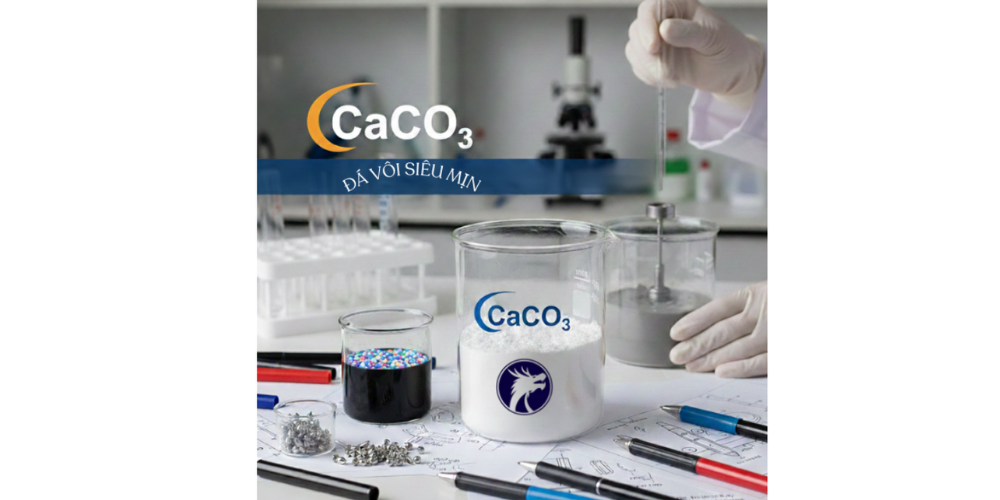
What is calcium carbonate (CaCO3) powder?
CaCO3, also known as limestone powder, is a naturally occurring mineral finely ground from limestone. Thanks to its low cost, high whiteness, and good dispersion properties, CaCO3 is widely used in the production of consumer plastics, including ballpoint pen casings.What are ballpoint pen casings made of?
Most ballpoint pen casings on the market are made from:- Plastic PP (Polypropylene)
- Plastic PS (Polystyrene)
- Plastic ABS
This is why it can be said that 90% of ballpoint pens on the market contain CaCO3.
3 REASONS WHY MOST BALLPOINT PEN FACTORIES USE CACO3
(2).png)
Reduce raw material costs.
Virgin plastic is expensive, while CaCO3 is much cheaper.Mixing CaCO3 helps to:
- Reduce raw material costs.
- Stabilize product prices
- Increase price competitiveness for manufacturers.
Increase stiffness and shape stability.
CaCO3 helps the pen casing:- Harder
- Less prone to bending
- Maintains its shape well even after prolonged use.
Improve machining capabilities
Depending on the dilution ratio, CaCO3 helps to:- Plastic flows more stably during injection molding.
- Muscle loss
- Minimize deformation after cooling.
If you are producing ballpoint pens or plastic stationery products, choosing fine, dispersed white CaCO3 will help: optimize costs, improve surface quality, and ensure long-term production stability.
Contact Apex today for advice on the right CaCO3 powder for your manufacturing company.