
BLOG
- Home
- Blog
- Plastic Polymer Composite Article
- Oil Bleeding in PVC: Causes and Solutions
Oil Bleeding in PVC: Causes and Solutions
August 06,2026
Oil bleeding in PVC leads to greasy, sticky surfaces, diminished aesthetics, and shortened product lifespan. Correctly identifying the causes of plasticizer migration through formulation design and processing conditions is the key to controlling this defect in large-scale PVC manufacturing. Join APEX Vietnam as we assess its impact and explore targeted technical solutions in the article below!
What Is Oil Bleeding in PVC?
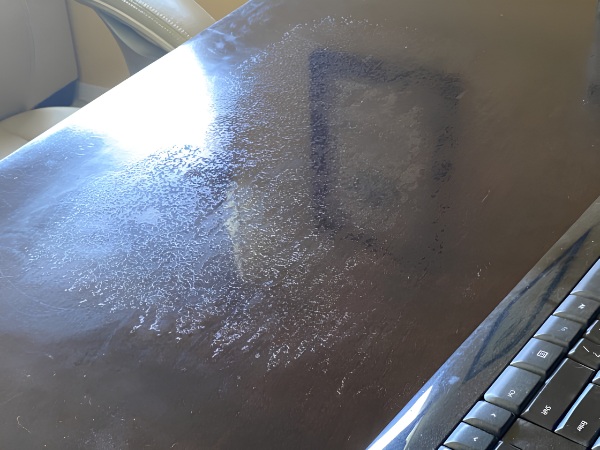
Oil bleeding in PVC - also referred to as plasticizer migration - is the process by which liquid additive molecules, particularly plasticizers and external lubricants, gradually separate from the PVC polymer chains and migrate to the product surface over time. The result is a greasy, tacky film on the PVC surface that compromises its original appearance.
PVC Products Prone to Oil Bleeding
Flexible PVC products with high plasticizer content are the most susceptible to oil bleeding. PVC electrical wires, PVC films for packaging and agriculture, PVC leather for furniture upholstery, and flexible PVC tubing for gas or chemical conveyance all fall into the high-risk category.
.jpg)
Oil bleeding in PVC electrical cables
Common early warning signs include: a greasy, sticky surface after just a few weeks in storage, faint oily smears visible upon touch, or abnormal dust accumulation on the surface despite clean storage conditions.
PVC products stored at elevated temperatures or exposed to direct sunlight tend to exhibit this defect significantly earlier than those kept under standard storage conditions.
Causes of Oil Bleeding in PVC
Oil bleeding in PVC occurs when plasticizers or certain highly mobile additives migrate from within the material to the product surface. The most common causes include:
- Low plasticizer compatibility with PVC: When an additive is poorly compatible with the polymer matrix, it tends to diffuse and accumulate on the surface over time.
- Excessive plasticizer loading: Using plasticizer beyond the absorption capacity of the PVC system increases the risk of additive migration and oily surface deposits.
- Elevated ambient or processing temperatures: Heat accelerates plasticizer diffusion, causing oil bleeding to develop more rapidly.
- Material aging: After prolonged service, the PVC matrix loses its ability to retain additives, causing oil to gradually seep to the surface.
.jpg)
Causes of oil bleeding in PVC
How Does Oil Bleeding Affect Product Quality?
Oil bleeding in PVC produces a dual negative effect: it directly degrades surface aesthetics while progressively impairing the mechanical properties of the material as plasticizer is lost from the polymer matrix. The table below summarizes the quality parameters most commonly affected in PVC quality control:
|
Quality Parameter |
Manifestation Under Oil Bleeding |
Level of Impact |
|
Surface aesthetics |
Greasy/tacky feel, dust attraction, loss of gloss |
High - immediately noticeable |
|
Paint or adhesive bond strength |
Coating or adhesive layer peeling |
High - affects secondary processing |
|
Shore hardness |
Initially decreases, then increases as plasticizer is depleted |
Medium - time-dependent |
|
Tensile strength at break |
Gradually decreases with additive loss |
High - affects service life |
|
Elongation at break |
Significantly reduced; material becomes brittle |
High - risk during end use |
Impact on appearance and user xperience
The most immediately visible sign of oil bleeding in PVC is a greasy, sticky surface upon contact, accompanied by an uneven oily sheen that detracts from the product's appearance. The slick surface also causes dust to accumulate far more quickly, making the product look dirty and worn after only a short time in storage or use.
.jpg)
Oil bleeding in PVC affects user experience
In real-world production, this is the source of numerous customer complaints involving electrical cables, PVC leather seat covers, and plastic packaging films - particularly when flexible PVC products are exported and subjected to prolonged transportation under high-temperature conditions.
Impact on mechanical properties and durability
As plasticizer continues to escape from the polymer structure, the PVC matrix progressively loses its softening agent - causing the material to become harder, more brittle, and more susceptible to cracking under mechanical stress. Tensile strength at break and elongation at break are the two parameters most clearly affected in thermal aging tests.
Standard QA/QC procedures in the PVC plastics industry typically require periodic hardness and elongation testing to detect early signs of embrittlement before products reach end customers.
Solutions for Controlling Oil Bleeding in PVC
To sustainably address oil bleeding in PVC, manufacturers need to act simultaneously on three levels: optimizing the additive formulation, controlling the PVC processing workflow, and establishing an early-detection QA/QC system. The five core technical solution groups are:
- Switch or reformulate the plasticizer to a type with higher compatibility with the PVC matrix.
- Rebalance the internal/external lubricant system within the compounding formula.
- Tightly control processing temperatures to prevent localized polymer chain degradation.
- Inspect incoming raw material quality and verify additive provenance before introduction into production.
- Establish a periodic thermal aging test protocol for each production batch.
These solutions can be implemented independently or in combination, depending on the specific root cause diagnosis at each manufacturing facility.
.jpg)
Controlling oil bleeding in PVC with plastic additive solutions
APEX Vietnam supplies a comprehensive range of PVC plastic additives serving production across multiple industrial sectors. For cases where products exhibit oil bleeding in PVC, blooming, or additive migration, APEX's technical team can assist manufacturers in diagnosing root causes, reviewing compounding formulas, and recommending appropriate material solutions to enhance product stability. Contact APEX Vietnam for expert consultation on selecting PVC additives that meet your technical requirements and optimize production efficiency.