
BLOG
- Home
- Blog
- Powders Article
- How Is Pharmaceutical Talc Powder Used in Pharmaceutical Applications?
How Is Pharmaceutical Talc Powder Used in Pharmaceutical Applications?
August 03,2026
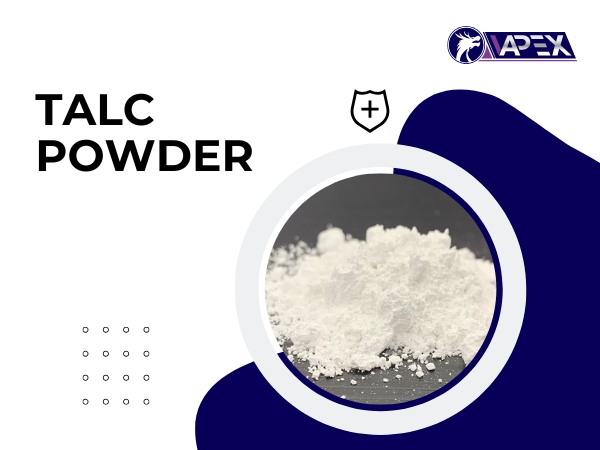
Pharmaceutical talc powder is a versatile excipient used as a lubricant, glidant, anti-adherent, and filler in tablets and capsules. However, this raw material must comply with pharmacopoeial standards and be confirmed asbestos-free to ensure patient safety. This article from APEX Vietnam provides a technical perspective on quality standards, testing methods, and detailed safety considerations for this essential pharmaceutical ingredient.
.jpg)
Pharmaceutical talc powder is odorless with high fineness
What Is Talc Powder in Pharmaceuticals?
Pharmaceutical talc powder is a naturally occurring hydrated magnesium silicate mineral that has been purified and quality-controlled according to pharmacopoeial standards. With its smooth, fine texture, insolubility in water, and high purity, talc serves as a functional excipient that improves flowability, reduces friction, and minimizes adhesion during drug manufacturing processes.
Why Is Talc Powder Widely Used in Pharmaceuticals?
Talc excipient is widely used because it fulfills four technical functions simultaneously within a single material.
- As a glidant, talc improves the flowability of powder blends, ensuring uniform distribution of materials into tablet dies or capsule shells, which contributes to consistent tablet weight and content uniformity.
- As a lubricant, talc reduces friction between tablets and the die/punch surfaces, minimizing equipment wear during compression.
- As an anti-adherent, talc prevents powder blends from sticking to punch surfaces during continuous tableting operations.
- Additionally, talc also serves as a flow regulator and filler excipient in certain formulations.
Pharmacopoeial Standards for Pharmaceutical Talc
Pharmaceutical talc is quality-controlled according to monographs in the Vietnamese Pharmacopoeia (DĐVN), USP, BP, and JP, with strict physicochemical specifications
|
Quality Parameter |
Typical Specification |
Technical Significance |
|
Appearance / Identification |
White powder, soapy feel, insoluble |
Confirms mineral nature |
|
Loss on Ignition |
≤ 5% (at 1000°C) |
Controls moisture and volatile impurities |
|
Iron Content Limit |
≤ 0.03% |
Ensures metal purity |
|
Lead Content Limit |
≤ 10 ppm |
Heavy metal safety for patients |
|
pH of Suspension |
7.0 – 10.0 |
Compatibility with active ingredients |
|
Particle Size |
As per formulation requirements |
Affects glidant performance |
|
Microbial Limits |
Meets pharmacopoeial criteria |
Microbiological safety for oral dosage forms |
Practical Applications of Talc in Pharmaceutical Formulations
Talc is primarily used in tablet production, capsule manufacturing, and certain topical preparations as a lubricant, glidant, anti-adherent, and occasionally as a filler excipient.
- Glidant: Talc improves the flowability of powder blends, facilitating uniform distribution into tablet dies or capsule shells, contributing to consistent weight and content uniformity.
- Anti-adherent: Talc prevents powder from adhering to punch and die surfaces during tableting, helping production lines run more consistently.
- Lubricant: By reducing friction between tablets and equipment, talc supports the compression process, reduces machinery wear, and minimizes product defects.
- Filler Excipient in Film Coating Systems: In some film coating formulations, talc is used as an anti-tack agent and surface modifier, helping tablets achieve a smooth, uniform coated surface.
- Topical Preparations: Talc is a common ingredient in dusting powders due to its moisture-absorbing properties and friction-reducing capabilities, contributing to a dry, comfortable feel upon application.
.jpg)
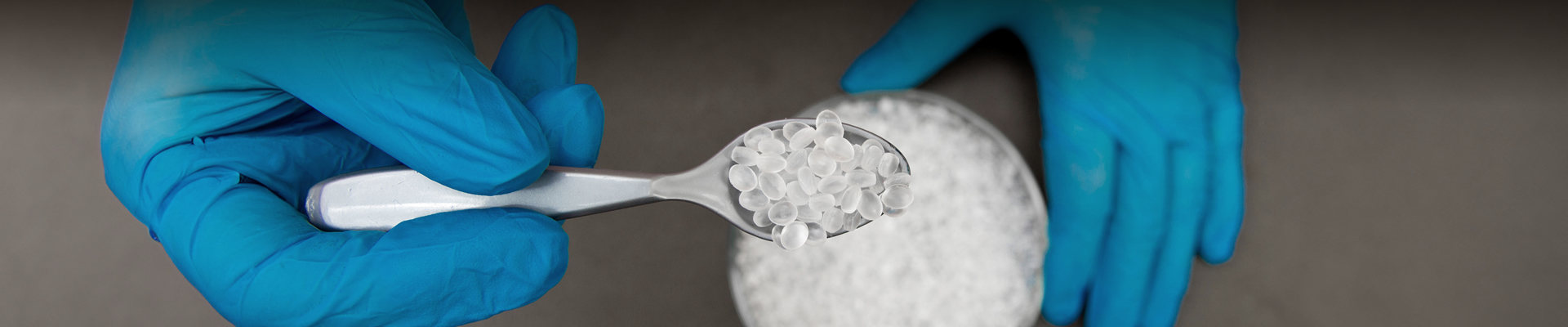
Talc powder is used as an excipient in tablet formulations
Key Technical Criteria for Choosing Pharmaceutical-Grade Talc Powder
When evaluating suppliers, manufacturers should prioritize products that meet the following technical criteria:
- Pharmacopoeial compliance such as Vietnamese Pharmacopoeia (DĐVN), USP, or BP, ensuring suitability for pharmaceutical applications.
- Asbestos-free test results from independent laboratories or testing organizations to confirm raw material safety.
- Stable particle size and distribution appropriate for the specific requirements of tablet, capsule, or film coating formulations.
- Complete quality documentation, including COA (Certificate of Analysis), TDS (Technical Data Sheet), and related documents for each batch.
- Transparent origin and supply chain, sourced from reputable manufacturers with clear quality control processes.
.jpg)
APEX Provides High-Quality Talc Powder for the Pharmaceutical Industry
With extensive experience supplying industrial minerals and specialty chemicals across multiple manufacturing sectors, APEX Vietnam offers high-quality talc powder with comprehensive, transparent technical documentation. APEX's technical team is ready to advise on product selection aligned with your formulation requirements, quality standards, and cost optimization goals. Contact APEX Vietnam today for technical information, samples, and pricing tailored to your actual production needs.
FAQ About Pharmaceutical Talc
What is the difference between pharmaceutical talc and industrial talc?
Pharmaceutical talc differs from industrial talc in purity and impurity control. Pharmaceutical talc must comply with pharmacopoeial monographs, meet stringent heavy metal limits, be confirmed asbestos-free, and have batch-specific COA documentation.
Should I use talc or magnesium stearate as a lubricant in tablet formulations?
Magnesium stearate is more effective as a lubricant at lower concentrations (0.25–1%), but it can be hydrophobic and may delay tablet disintegration. Talc is more favorable for disintegration, typically used at 1–5%, and is suitable when both glidant and anti-adherent functions are needed in the same formulation.
Is talc powder in oral medications dangerous?
Pharmaceutical-grade talc that meets standards and is asbestos-free is considered safe for oral use at typical excipient levels. The only risks arise when talc is contaminated with asbestos or when powder is inhaled during manufacturing processes.
Talc powder is a critical excipient that enhances powder flowability, reduces friction, and improves manufacturing efficiency across a wide range of pharmaceutical dosage forms. If you are seeking high-quality pharmaceutical talc powder that meets stringent industry standards, APEX Vietnam offers rigorously controlled products backed by comprehensive technical documentation and expert consultation. Contact us today for product information, sample requests, and customized quotations tailored to your pharmaceutical manufacturing needs.